Academic Societies

Taking part in one of the School’s societies is an opportunity to explore new interests, extend in-class learning and develop skills with a supportive group of like-minded pupils.

SOCIAL SCIENCES

Braken Society

Named after the controversial Old Sedberghian, Viscount Brendan Bracken, a businessman, politician and Minister of Information from 1941 to 1945.

The Bracken Society invites Sedbergh history pupils to present on aspects of history either related to their academic learning in class or simply of interest. Within a supportive group, pupils in the Bracken Society are able to practise and develop their public speaking and debating skills while deepening their knowledge and understanding of how to think like a good historian.

Debating Society

The Sixth Form Debating society is busy and active throughout the year with a series of internal inter-house black tie dinner debates. In addition, regional and national debating competitions are entered with much success. The skills and knowledge developed through these formal competitions as well as the informal discussions surrounding the society provide a good basis for debating at higher levels post-Sedbergh.

CLASSICAL SOCIETY

Keynes Hayek Society (Economics)

The Keynes Hayek is a student-lead Economics Society, in which pupils present on current economic matters. Topics have included the role and purpose of the international monetary fund, is immigration good or bad for the economy, the economics of gambling.

Phoenix Society

The Phoenix Society is the Academic Enrichment Society for pupils in Years 9, 10 and 11. The aim of the Society is to expose pupils to topics outside their regular curriculum and to push them to think critically, debate ideas, solve problems and confront the challenge of cognitive dissonance. Topics have included; The new and developing worlds of Bitcoin and The Dark Web: The subtle boundaries between truth and lies in non-fiction writing and a session entitled The Birth of the Modern: Renaissance Cosmology and the Transformation of the Medieval Mind, linking art, literature, religion and science.

School of Athens

The purpose of the society is an opportunity for pupils to share their thoughts and ideas, to delight, excite and inform on a wide range of subjects. Its aims are to stretch pupils in their academic subject and allow others to share in their knowledge.
In 2014 two pupils, P.E. Hollings and R.M. Strachan, established School of Athens as a forum for pupils to explore academic and intellectual matters in greater depth than was possible in the classroom. Strachan delivered the inaugural lecture, detailing why the society had been named after a painting by Raphael. The remit of the society was such that pupils were the only contributors. Early lectures included W. Thornton’s exploration of the evolution of man, R.J.E. Stevenson’s discussion of the illegitimate state, and J.A. Cowen speaking on the Romantic movement. School of Athens remained a popular sixth-form society which offered pupils the opportunity to explore areas of personal study and share their findings with an eager audience.

PHYSICAL SCIENCES

The Burke and Hare Society (Senior Biology)

The Burke and Hare Club is an Academic Society that provides pupils with the opportunity to give presentations and lead demonstrations of practical science that is of a particular interest to them. As well as welcoming guest lectures from visiting academics. Another function is to support pupils aspiring for degrees in Medicine, Dentistry and Veterinary Science.

This Club was formed in September 2008 to “nurture and foster those in the School aspiring to medical careers in their many guises, including doctors, nurse, dentists, vets and physiotherapists.” At the time, there were seven Sedberghians “approaching the rigours of U.C.A.S. and medical schools’ admissions vagaries.” In its inaugural year, the Club visited Body Worlds and Keele Medical School. Attempts to observe embalming at a funeral parlour proved unsuccessful and hopes of visiting an abattoir remained unfulfilled. A Mr. Belcher gave what was described as an “awesome” but “disturbing lecture” on the treatment of cancer. This included an account of advances in radiation treatment, the cost of which prompted discussion and debate on the merits of state-provided and private medical treatment. In 2016 Katherine Fleck explained the principle of genetic fingerprinting by demonstrating gel electrophoresis of D.N.A samples and explaining its application in forensic science.

A regular visitor was Dr. G. Sutton, Honorary Lecturer at the University of Nottingham Medical School, who came to each visit armed with a sheep’s brain for dissection. Burke and Hare continued to provide a broad educational grounding to pupils hoping to enter Vetrenary Science, Medicine or Dentistry. Dr A. McMeechan took the reins following the retirement of Dr. M.P. Ripley, maintaining both its academic rigour and its conviviality.

The Invisible College (Science Society)

The Invisible College is a group of intellectually curious pupils dedicated to furthering scientific knowledge. The group meets regularly within the physics department, both to present and discuss scientific topics close to the hearts of the sixth form science pupils.

The Invisible College was established in the lent term of 2007 by Physics teacher Mr. Hartley. Mr. Hartley sought to offer sixth form pupils a forum to explore both current areas of research in physics and the work of historic physicists. The inaugural meeting featured a talk by H.R. Lightbody titled ‘Einstein Versus Newton’. The evening recreated a similar discussion held at the Royal Society in 2005 and questioned which of the scientists had made the greater contribution science, and who had made the greater contribution to humankind. The Invisible College journal recorded that ‘Both demonstrations worked (!) and the food went down well. A successful evening.’

The issue of catering at academic societies was a perennial problem. Tempting pupils out of their boarding houses in the depths of winter was certainly easier when chocolate brownies and juice were on offer, although some staff wondered whether pupils were attending for the wrong reasons as some were more inclined to create crumbs than contribute to academic discussion. Invisible College quickly became a regular feature with meetings several times a term. Pupils were encouraged to research and present their findings to their peers in preparation for the rigours of scientific peer review they would encounter at university and beyond. This nursery for budding physicists had a high conversion rate to study of science at university.

MUSIC AND PERFORMANCE

Orchestra

The Orchestra is available to all our instrumentalists who have reached the requisite standard. Under the direction of Chris Allinson (Director of Music), the orchestra play a central role in many of our concerts throughout the year. 

Rehearsals take place once a week in the Thornely studio, giving pupils the opportunity to mix with all ages and abilities. Throughout the year, the Orchestra focus on a number of different genres ranging from traditional classical music to film scores. 

Big band 

Our big band take centre stage at our annual event ‘An evening of Jazz and Swing’. This ensemble allows pupils to develop skills such as improvisation and explore a range of exciting genres from Funk to Jazz to Soul. 

Lead by Chris Allinson, the pupils rehearse once a week in the Thornely studio. 

Chapel choir

Sedbergh School Chapel choir is lead by John Seymour (Director of Creative Arts). It is the departments largest ensemble with members upwards of 50. This is an auditioned ensemble open to all pupils in the school. The choir has a history of great success in national competitions, most recently being placed second in Barnardo’s National Choral Competition 2024.

The Chapel Choir rehearse twice a week with the primary focus of providing music for each Sunday service. They also feature in concerts such as ‘An Evening of Jazz and Swing’ allowing pupils to explore a wide range of genres. 

MUSIC AND PERFORMANCE

Chamber ensembles

Chamber Choir 

Chamber choir is an invite only ensemble provides an opportunity to challenge and stretch our most able musicians. Lead by John Seymour, pupils rehearse once a week in the Thornely Studio singing new and challenging repertoire. 

Pop collective 

Pop Collective is an opportunity for our pupils to take creative control of the music and form their own bands. With the support of Mark Norman (Percussion Teacher) and Dave Sykes (Guitar Teacher) students are guided through the arrangement and rehearsal process.  

Pop collective rehearse once a week and perform in various gigs and social events throughout the school calendar. 

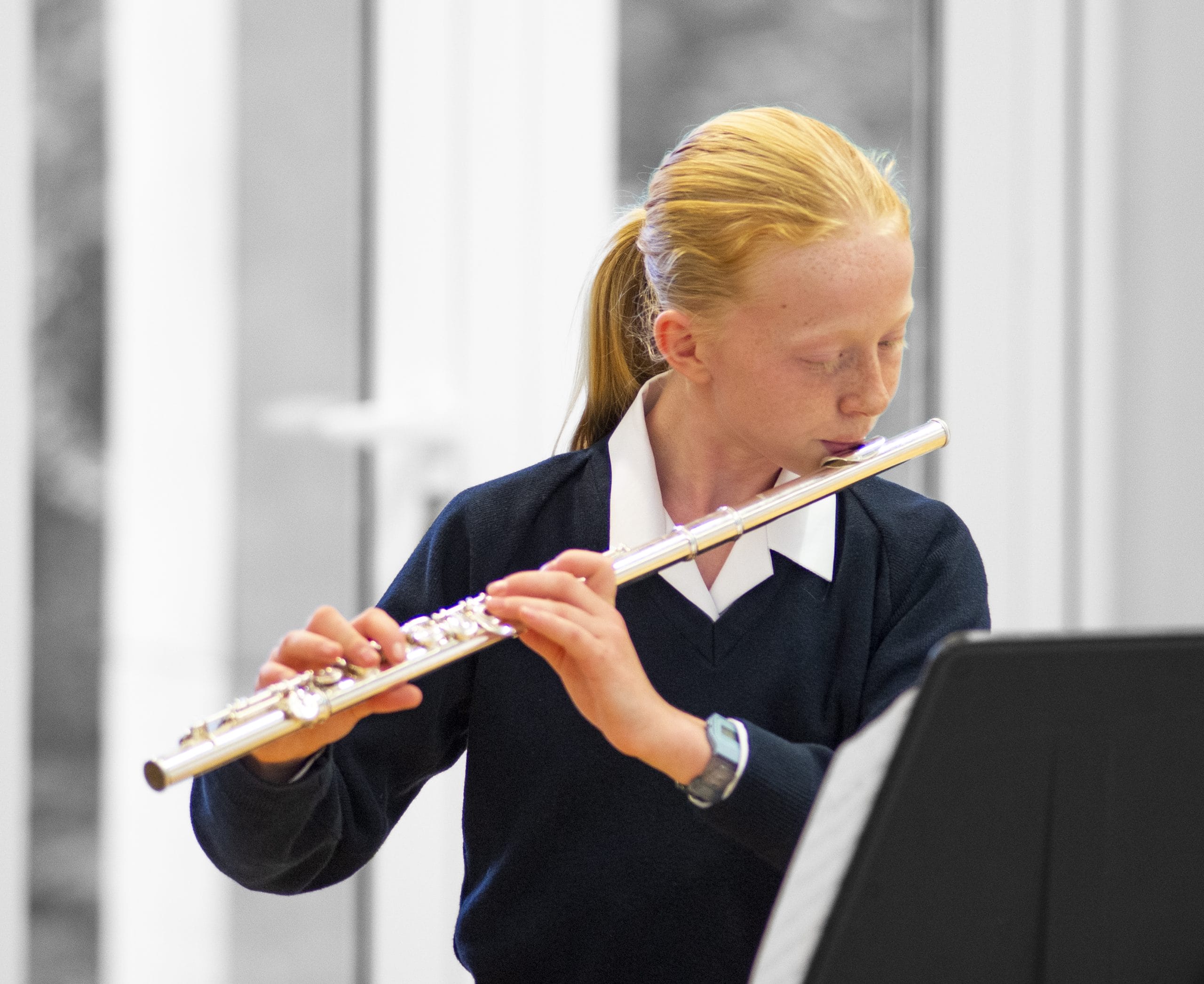
String group/Flute Group/Clarinet Choir/Percussion ensemble 

These chamber ensembles are all run by instrumental specialist providing pupils with the opportunity to explore their instruments as well as different genres of music in a more intimate setting. These ensembles rehearse weekly in Guldrey Lodge.

Male Voice Choir (MVC) 

Male Voice Choir is an opportunity for any of our lower voices to come and sing in a relaxed and accessible way. Unlike chapel choir, MVC does not require an audition, only enthusiasm! MVC have made appearances in concerts such as ‘A Night at the Musicals’ and our Wilson Run concert. They sing a range of genres and are lead by John Seymour (Director of Creative Arts).

Show choir 

Show Choir is an opportunity for any of our upper voices to come and sing in a relaxed and accessible way. Unlike Chapel Choir, Show Choir does not require an audition, only enthusiasm! Show Choir have made appearances in concerts such as ‘A Night at the Musicals’ and our Wilson Run concert. They sing a range of genres and are lead by Lucy Parker (Assistant Director of Music).  

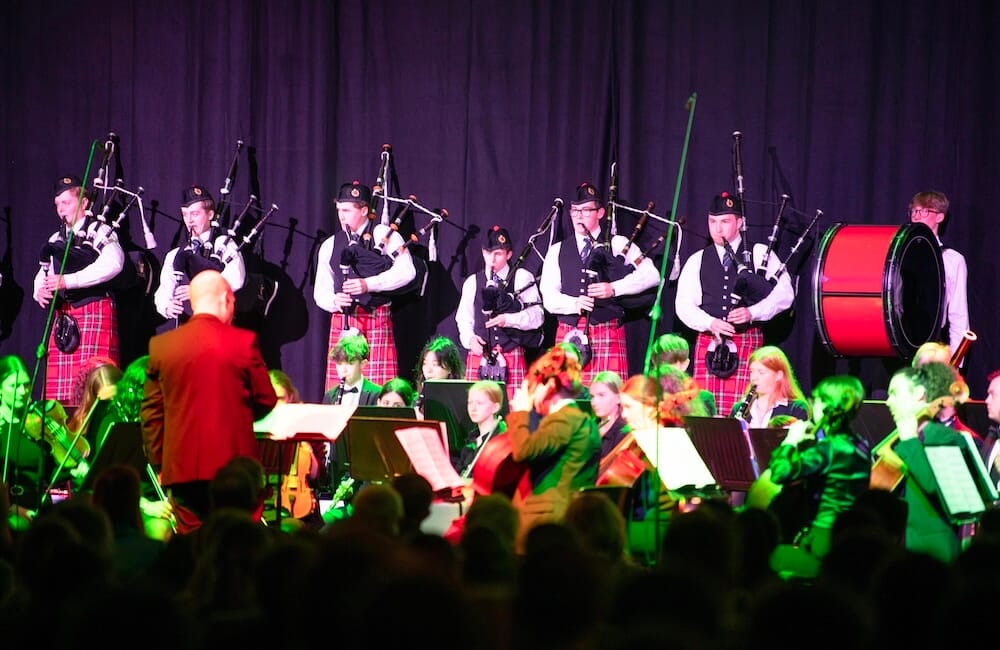
Pipes and drums

Available to pupils no matter the level of experience, our Pipes and drums group play a central role in our main school events. Our Remembrance service, held on the cloisters each year, lead by our pipers is always a poignant moment in the school calendar. They are also known to make appearances at sporting events boosting moral and energy.

Pipes and drums rehearse each Thursday in the Thornely Studio with Brian Robinson.  

GENERAL INTEREST

TGI (Christian Society)

Enjoyable and thought provoking, with much lemon drizzle cake consumed and a huge variety of areas discussed, from Stalin to Science. Sometimes this is explicitly Christian in nature; at other times, the aim is to discuss an issue from a Christian perspective.

Arena Society

The Society aims to help sport participants have a greater understanding of their body, various aspects of training and ultimately to help improve their performance in sport – with a focus on running. Valuable topics of discussion have inlcuded ‘How to breathe’ and ‘The Importance of Sports Nutrition’.

VISIT PROSPECTUS ENQUIRE
x