
Academic Mindset

At Sedbergh, academic success is about developing young people who can question, analyse, reason and think with confidence. Something far more valuable than simply mastering content or achieving grades.

Visit Enquire about a place

How we develop independent thinkers

Across departments, a consistent theme emerges: pupils are encouraged to think like mathematicians, psychologists, scientists, economists and scholars — not simply to learn material, but to understand how ideas are formed, tested and applied. In a non-selective environment that values stretch alongside support, we prioritise intellectual curiosity, resilience and thoughtful judgement. These are the habits of mind that prepare pupils not only for examinations, but for university, leadership and life beyond school.

Learn how our academic disciplines develop independent thinkers
Intellectual Resilience

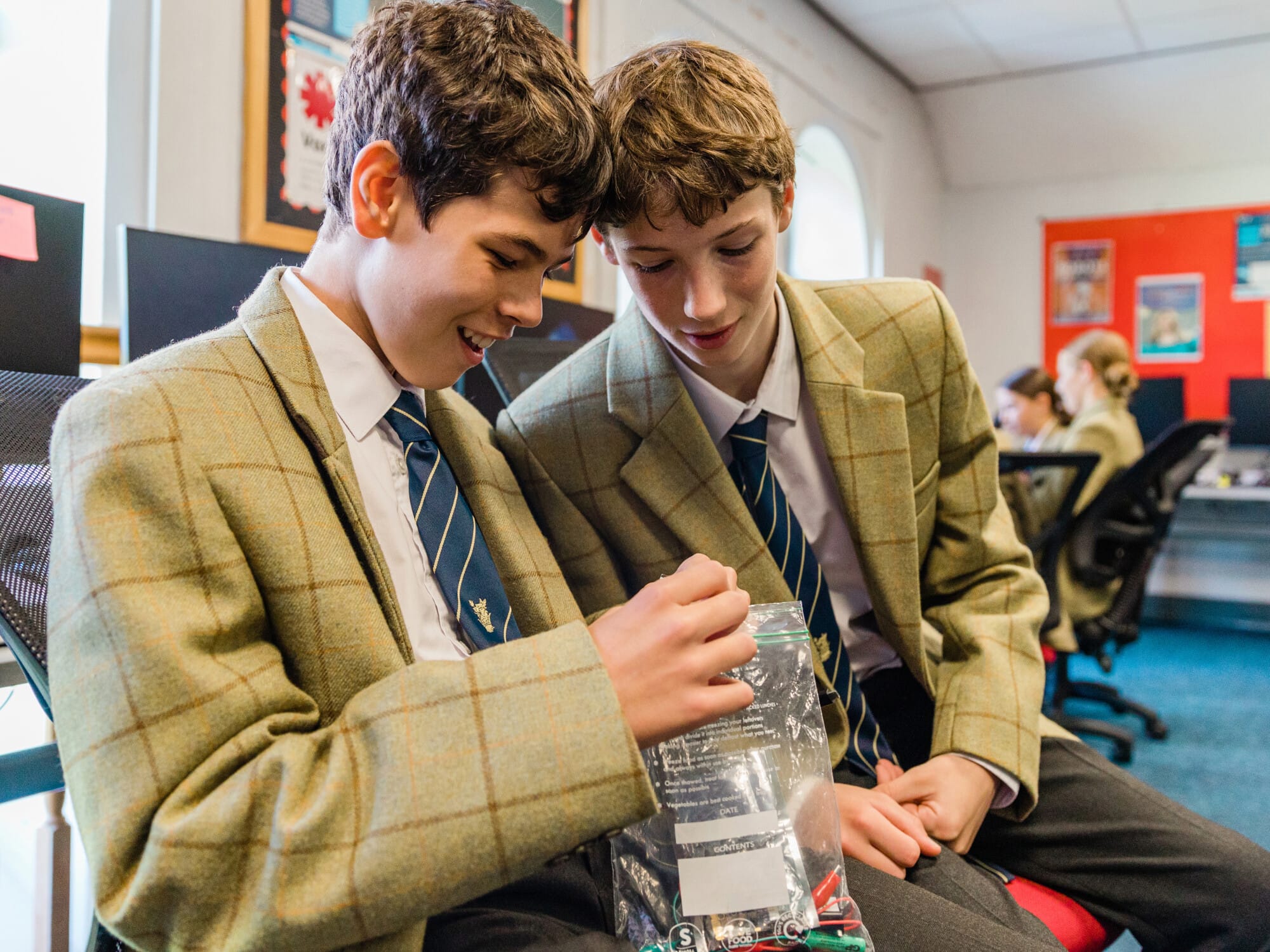
We value progress over perfection and encourage pupils to trust their own thinking even when ideas are uncertain or challenging.

Intellectual resilience — the ability to persist with difficult problems, to reflect, adapt and grow — is a cornerstone of our academic culture, and it is nurtured across subjects rather than left to a single class. As Mr Dafydd Roberts-Harry, Head of Mathematics, notes through the excitement of “lightbulb moments” and the quiet confidence that comes from mastering fundamentals, pupils learn to build confidence in tackling complex ideas by engaging deeply with material, not simply seeking the quick answer. This approach helps pupils develop a growth mindset in practice, equipping them not only for examinations but for future study and life, where enduring confidence in one’s own reasoned judgement is a rare and valuable skill.

Understand how our academic results extend beyond league tables

“Sedbergh is a haven in which children develop into adults ready to thrive. A Sedbergh education develops the whole child, and acquiring ‘powerful knowledge’ is key to this. Maths is powerful knowledge — it transforms your ability to understand and interact with the world.” Mr Dafydd Roberts-Harry, Head of Mathematics


Confidence in uncertainty

One of the greatest academic strengths we foster is pupils’ confidence in facing uncertainty — the ability to evaluate evidence, question assumptions and think independently. As Paul Lucas, Head of Psychology, highlights, pupils who study disciplines such as psychology learn not just what to think, but how to think: to interpret data, to weigh competing explanations and to make judgements grounded in reason rather than guesswork. This intellectual confidence helps pupils handle ambiguity with curiosity rather than anxiety, strengthening their resilience in examinations, in future study and in the complex decision-making they will encounter beyond school life.

“Pupils emerge from the course with excellent numerical ability (data handling and interpretation), a strong understanding of the mechanics of scientific research design, an appreciation of philosophical debates (e.g. free will vs determinism), as well as the ability to develop coherent and well-supported arguments. Fundamentally, they will become fine critical thinkers with the ability to reason and analyse, including the enviable skill of scrutinising evidence to assess the strength of support for a theory or argument.” Mr Paul Lucas, Head of Psychology

Learn how our pupils face uncertainty to follow varied pathways

VISIT PROSPECTUS ENQUIRE
x