
History of Sedbergh School in 50 Objects #20: The First Brown Book, September 1912


One of the most frequently accessed documents in Sedbergh School Archive is the Brown Book. This small booklet, designed to fit inside a blazer pocket, was an essential element of Sedberghian kit for over a century.
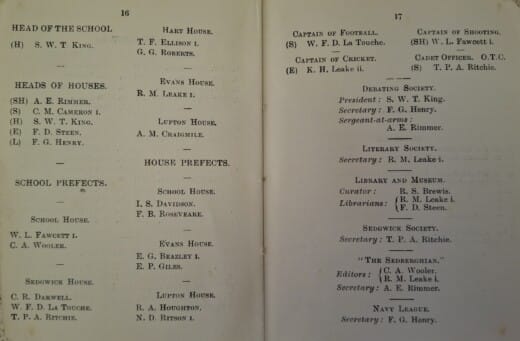
The contents of the Brown Book has ebbed and flowed over the years, becoming fuller throughout the twentieth century, before contracting as laws about data sharing came into play. The earliest Brown Book, which dates from the Michaelmas term of 1912, recorded staff and pupil lists, positions of responsibility within School, and a calendar. The staff lists record the alma mater of Common Room members and it is interesting to note that 16 of the 17 members had been Oxbridge educated. The pupil lists are supplemented with symbols, such as an asterisk *, elongated cross †, Greek alpha α, and beta β characters and others. Some of the symbols have known meanings and indicate that the pupil was involved with choir, was a scholarship recipient, house prefect, or training to join one of the armed services. Sadly, the meaning of the Greek letters has not been recorded and so the full significance is lost.
The small selection of pupil leadership positions recorded in the first Brown Book includes the Literary Society Secretary, the Sergeant-at-Arms of the Debating Society, a curator of the School museum and two pupil librarians, as well as a three sporting positions, and two military roles. Reflecting on the elevated roles available to pupils it is clear that the School of 1912 respected scholarship and intellectual curiosity just as much as physical strength.
The calendar details two or three activities each week, such as sports fixtures, cadet field exercises and the weekly Chapel service. This is particularly stark compared to our contemporary dynamic School calendar which details several dozen activities each day.
During the twentieth century the Brown Book expanded to over 50 pages per term which included such information as details of scholarships and prizes awarded, the curriculum, and timetables for each form. As the twentieth century progressed the frequency of publication changed from termly, to twice yearly and finally to annually. In 2020, following the move to online learning in the Covid-19 epidemic, and also the change to a more dynamic timetable and calendar, the Brown Book was published as a digital only document. The Brown Book is still useful for staff internally, but it is no longer the ‘go-to’ resource that it used to be for pupils. In the fluid and ever evolving contemporary School, static hard copy documents no longer have the same prestige.