

Month: May 2023
Benedict of Winder House has a long-standing interest in genetics and he followed this passion to complete his Extended Project Qualification (EPQ) on gene editing in year 12. He is now building the work experience and broader skills and knowledge needed to apply to study medicine. Benedict, who joined Sedbergh in year 10, has his sights firmly set on obtaining a medical place at a top medical school in the UK.
What subjects are you studying at A-Level?
I’m studying biology, chemistry and physics – it’s tough to say which is my favourite. At the start [of year 12] it was biology but now I couldn’t pick between biology and chemistry. I love looking at the cellular level – the interactions between cells – which underpin how major organisms work and function. Ever since I can remember I’ve been a massive fan of the sciences.
What is your dream for university?
My dream is to study medicine at Oxford but I’m conflicted because I am quite interested in microbiology and gene editing! However, they can overlap. At Easter I did work experience in Kendal Hospital and I spoke to a thoracic specialist there and he recommended that I do medicine and then I can shift into microbiology if I want to. Its much harder to go the other way, from microbiology to medicine. Oxford is at the top of my list because I like having competition in my learning. It’s definitely a university that will give me the opportunity to fight for my spot and then compete against my classmates at an intellectual level. I like problem based learning [an approach to teaching medicine] and so I’ve been looking at Lancaster University as well. Edinburgh and UCL [University College London] are also universities that I’m looking at applying to. For my fifth choice I’m thinking about biochemistry at Durham. When I’m considering universities the style of teaching and the location are things I’m looking at.
How is Sedbergh helping you to achieve your ambition?
The Oxbridge co-ordinator, Miss Bell, has sent me messages with tonnes of extra-curricular reading and information that I can get on with to help me. All of the teachers give really great advice, but Miss Rowland [Head of Year] and Dr McMeechan who supports medical applicants [at the School] have been especially helpful.
I think Sedbergh is great at providing more opportunities such as early morning maths and Dr Worgan set up extra chemistry sessions which is great. I quite enjoy the Sedbergh Certificates as well; they offer points for going out and doing your own research. I came top three for points last year and this year I’m already on a gold certificate.
I also participate in [the School’s] academic societies. After I finished my EPQ Dr McMeechan asked me to present to the Burke and Hare [biology] society and I really enjoyed it. So, I also prepared a talk for the School of Athens [general academic interest]. I might be doing an Invisible College [physics society] presentation too.
Getting into medicine does require a lot of extra preparation – what other things are you doing?
I’ve done some work experience [Kendal Hospital] and I’m doing a massive amount of reading; I’ve currently got about 10 books on medicine on my bookshelf at school and another 20-30 at home that I’m plugging through. I’ve done first aid courses to learn a bit more and when I can, I’m attending a lot of online seminars. In the School holidays I try to attend face-to-face, taught courses too.
Have you started your medical entry preparation?
I have. I’ll have to take both the UCAT and BMAT medical exams. I started practising and revising as soon as I finished my GCSEs and I’ve been doing a little bit every week. I prefer the style of questions on the BMAT, a bit more science-based.
When did you decide you wanted to study medicine?
It started when I was four years old – I want to be a vet. I was with my family in Qatar and I found a stray kitten that had a defect. Since then I was really interested in veterinary medicine. I was interested in that for a long time – until about year eight and year 9 when I started looking down the route of human medicine and I decided I was more suited for that.
How do you stay relaxed and happy during exam time?
To the best of my ability I try and keep to the schedule that I have for the rest of the year. So, it’s almost like nothing is out of place. Do revision obviously, but do a comfortable amount and then put the revision down and do something else that excites you; whether its football with friends or gaming. Nothing has to change because its exam season. Stay level-headed and don’t over-think it; that’s how I approach it.
Bo of Lupton House is the 2023 Head of School and, together with her twin sister, has chosen to accept a scholarship to study and play hockey at a university in the United States. Bo explains her choices and also talks about the experience of being Head of School and the value of leadership roles.
Bo has studied PE, Geography and BTEC Business at A-level.
Have you always wanted to study overseas?
When we were in Year 9, in Lupton House two past students came in and talked to us; they had gone over [to study in the USA] for Hockey and they loved it. My twin sister and I had a really good relationship with our Hockey coach and he told us, “you girls could go and thrive over there.” So we looked into it and went with it. After that we didn’t look at any UK universities.
How has being at Sedbergh helped with your preparation for your US college application?
We had a lot of help from the Head of Year, Miss Rowland and Mr Lucas. Mr Lucas helped us with the SATs, which we didn’t actually end up taking because of COVID. We just gave in our GCSEs, but before we knew we could do that, Mr Lucas did loads of sessions with us on SAT exams and how to prepare for them. Miss Rowland helped us with all the forms that we had to fill in. Mr Davey [Director of Hockey] helped with the clips because we had to send in a video of us playing from loads of different games. Then Mr Harrison [Headmaster] and Mrs Macdonald, our Housemistress, wrote my references which I put in my application. So, everyone did something.
What was the biggest challenge for you when applying to the Universities?
Picking which one [University] we wanted to go to, because obviously it’s a long way away from home and there is a big time difference. We went over and visited three [Universities] and when you are there is when it hits you that this is where you’re going to spend four years of your life.
It’s quite a big decision to make; they all had pros and cons.
What are you going to study at University in America?
I’m going into the business school, but I’m not sure which part of the business school yet. In America you can go undeclared, and then once you’re there, you try different things and then you major. I have no idea what I want to do after I graduate. I’ve never been able to answer that question even from being really small.
Did you ever imagine that you would be Head of School?
No! Even at the end of Year 12, I had no idea that I was going to be it [Head of School]. When I found out I was excited, but I was also very nervous because it is such a big thing, especially at Sedbergh.
Do you feel that as Head of School you have created a legacy, something that people will remember?
I hope I’ve left something that will be remembered. I think you always remember your first Head of School – what they did; seeing them on stage or speaking in Chapel, you look up to them and think, ‘that’ll be us one day, guys’. I’d say that, to me, they were a role model. I hope I’ve had that impact on Year 9s that have come in.
What do you think’s the biggest lesson you’ve learned being Head of School?
If you don’t ask, you won’t get! I think being Head of School, you’re the voice of the pupils. You represent the pupils to say what’s maybe not going well, or what they like. Obviously, there are some suggestions that come forward where you just say “no”, because it’s silly, but other things that you just have to convey it in a way that Mr Harrison, Dr Burns and Mr Gunning might say yes.
Do you think that being Head of School has provided opportunities and experiences that you might not have had otherwise?
Oh, I definitely think so. Speaking in Chapel – public speaking – was something I was most nervous about, but you get used to it and it’s fine. I’ve been able to go to the Prep School a couple of times, interacting with the younger year groups, which is really nice. I’ve also attended the Open Days and spoken to parents. I’ve been in to each Boarding House for formal lunch so, I’ve seen how each Boarding House works. I wouldn’t have been able to do those things if I wasn’t Head of School. I have taken a lot from it and I think I’ve learned a lot of skills.
Would you recommend taking on a leadership role to other pupils?
Yes, I think it is very rewarding. You do get a lot out of it, but what you put in, you get out. Mr Harrison, Dr Burns and Mr Gunning don’t put a lot of pressure on you because you’re in Year 13 and you have exams and a lot of work.
What will you miss most when you leave Sedbergh?
The Boarding House. 100%. Living with my friends; it’s a little community. You go back to your Boarding Houses for lunch, for break, it is a home away from home; it feels like a family. I have loved it and I wouldn’t change any of it.
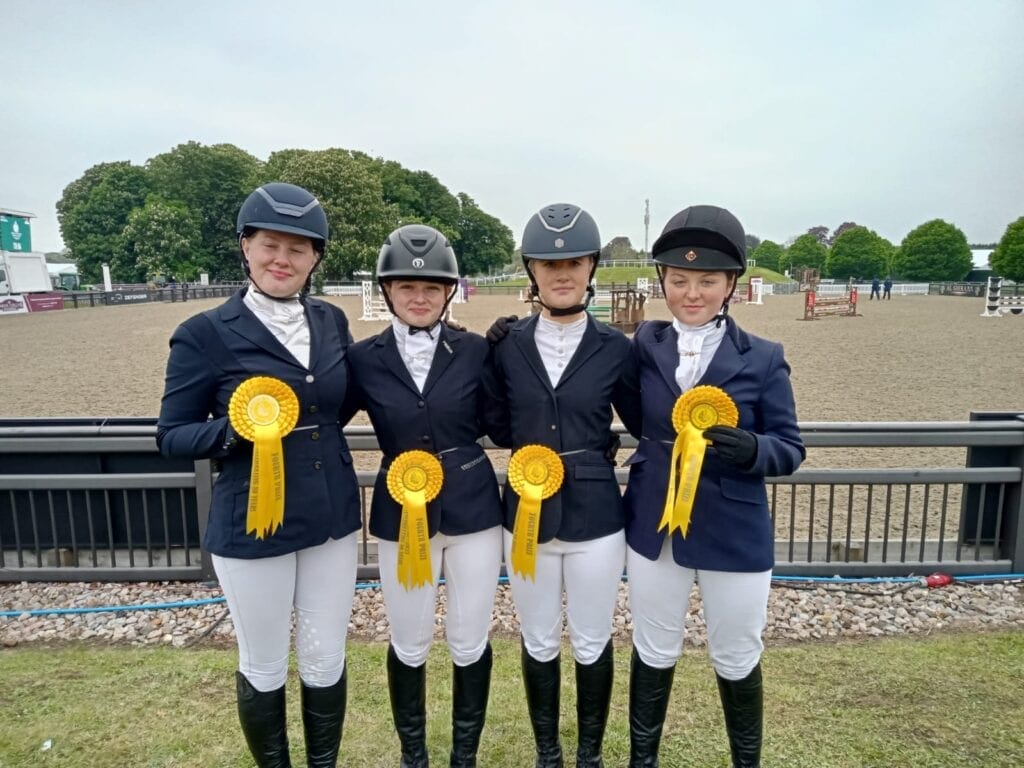
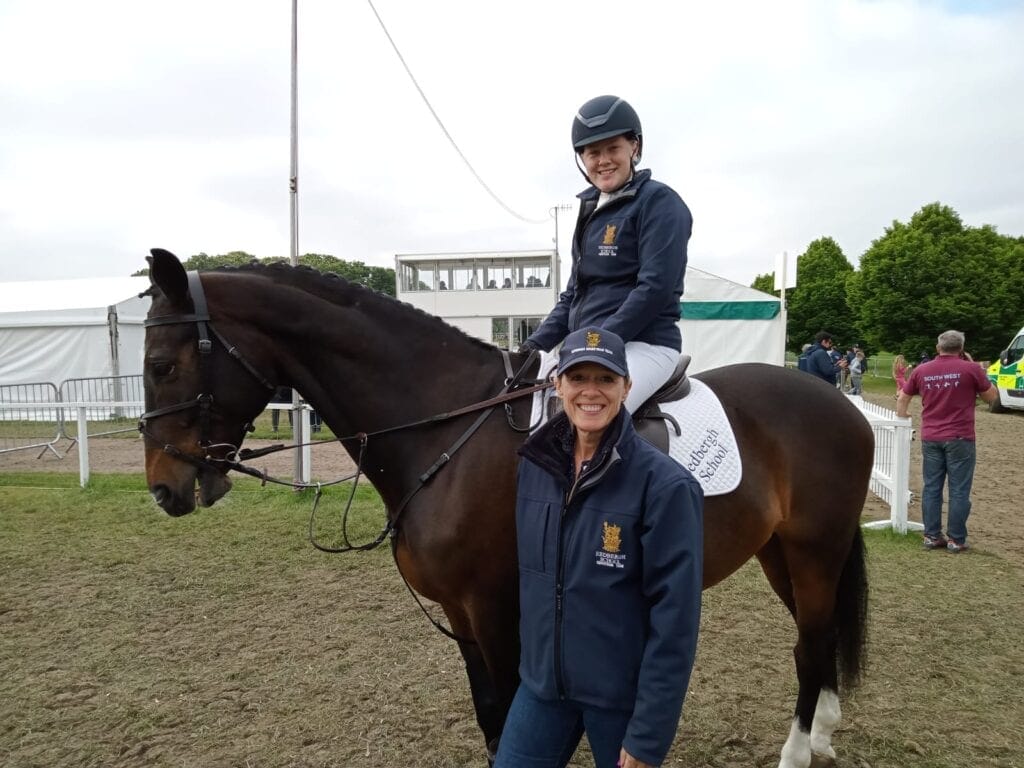
In a triumph for our equestrian team, Sedbergh School have placed fourth at the 2023 Royal Windsor Horse Show, a national show jumping event undertaken in teams of four. The event is held in the grounds of Windsor Castle and is extremely popular – attracting thousands of visitors and media (and some royalty) in addition to the teams themselves. Our team didn’t see any royalty, but the event was dizzyingly frantic. Although Sedbergh School competed at Royal Windsor in 2022, for three members of the team, this was their first visit. Scarlett, in Year 13, is the oldest member of the team.
“It’s massive! It’s a huge arena, its a huge occasion. Every school is very competitive.”
Scarlett
Scarlett describes the level of commitment needed to compete and be good enough to qualify for an event like Royal Windsor; she trains on Wednesdays and Saturdays and is usually competing on Sundays. Riding involves a lot of constant work, travelling, packing, cleaning and just generally looking after your horse.
“You can’t just turn up and ride at Royal Windsor if you haven’t ridden in four weeks. It’s not like that – it’s time and it’s effort. Then when you’re at the competition you get up in the morning and feed them [your horse], take them out for grass – it’s all of that. It’s not as simple as hopping on a bus or picking up a racket. Looking after a horse is a very big job.”
Scarlett has a full schedule; she is studying for her A levels in Biology, Business and Psychology. She has to be very regimented with her time although sometimes she does end up studying in the horse lorry!
“Sedbergh has been incredibly supportive [of my riding]. Mrs Christie [Housemistress of Robertson House] has been great. She gets it. She understands that you can’t get on an animal with four legs and another brain without the endless hours of training. There are also a lot of riders in Robertson [House].”
Scarlett plans to study business management at university. For the future, Scarlett hopes to continue riding as a hobby whilst she is at university; she enjoys riding but doesn’t want it to be more than a hobby.
What the Sedbergh equestrian team also has is incredible team spirit.
“There’s something about the riding team, we’re so connected as a group. Whenever someone needs help, we’re always there. We’re very reliant on each other; supporting each other. For example, we have children in year 2 who are coming up riding so when we’re at competitions and we see them and we cheer them on. The camaraderie is something else. It’s so nice, we’re really tight – a really tight-knit team.”
“It’s weird, its not a lot of pressure. We all understand each other and we know we have down days and good days, so you never really feel the whole pressure of thinking you have to do really well. You’re allowed to have bad days. I think that’s why we’re so successful; we’ve got two national titles and top placings everywhere! We’re quite a decorated team – and it’s because we never put a ton of pressure on ourselves. We all do it because we enjoy it.”
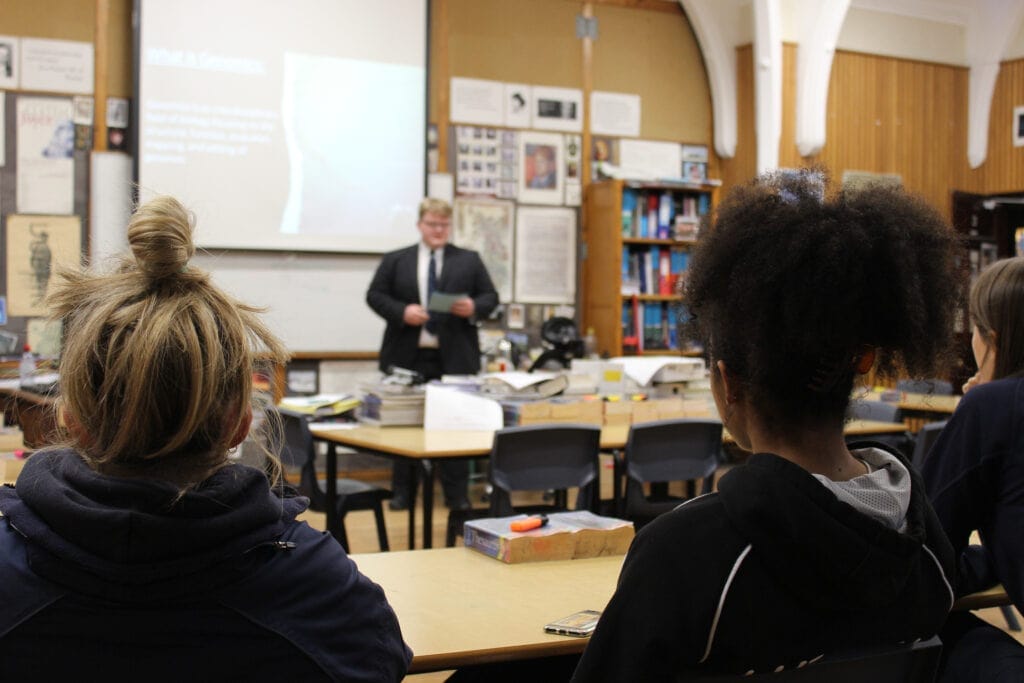
The School of Athens is a pupil-led academic society that challenges pupils to present and defend their thoughts in a supportive group of peers. More information is available on our School Societies.
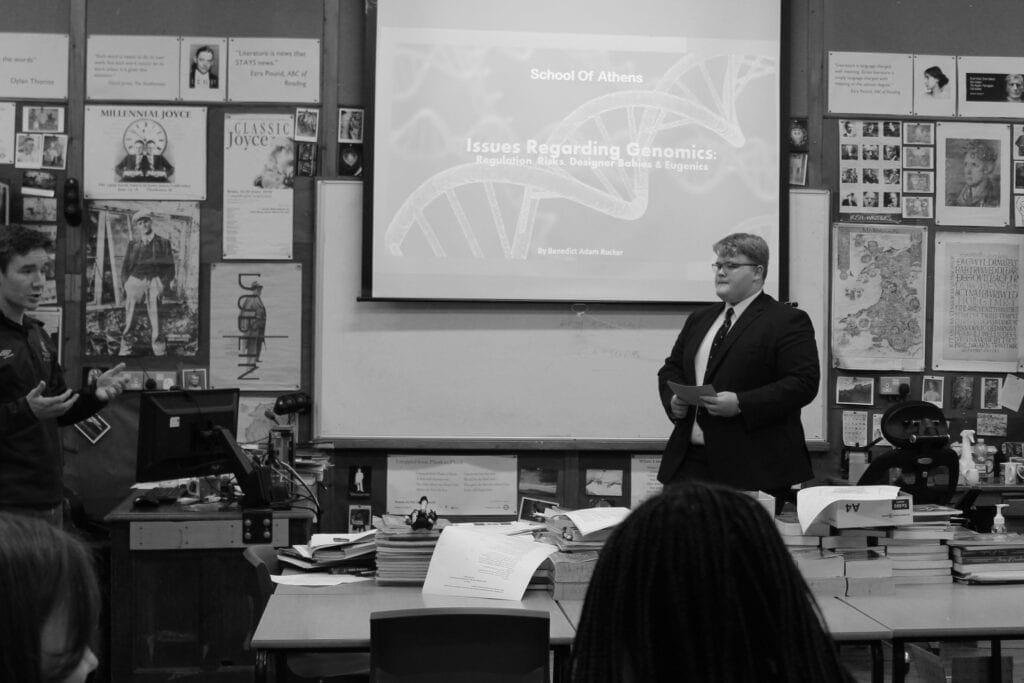
This week’s presentation and discussion was led by year 12 pupil, Benedict, whose well-researched and informative presentation raised a lot of issues that everyone was able to relate to. Below is a summary of Benedict’s presentation and highlights from the audience’s many questions.
Issues regarding genomics: Regulation, Risks, Designer Babies and Eugenics
So what is genomics? Genomics is an interdisciplinary field of biology, focusing on the structure function, evolution, mapping and editing of genomes. The field of genomics is quite controversial despite the vast majority of genomics consisting of research, which allows scientists to accurately understand how organisms function. However, gene editing – while a small part of genomics – is a very controversial topic and overshadows the whole field by quite a bit and is what we’ll be talking about quite a lot today.
So what is gene editing? Gene editing is the alteration of an organism’s genetic material by inserting, replacing or deleting a DNA sequence. This is typically performed with the aim of improving some characteristics of the organism or even correcting genetic disorders. Genetic editing requires the use of complex software and modern scientific technologies, which can insert a place or delete DNA sequences.
The genetic modification of humans is still relatively new and research is often impeded due to 96% of countries implementing strict laws or bans regarding research projects that focus on the genetic modification of humans. Genetic editing comes with many scientific risks such as the creation of major deformities and even disrupting cell specificity. It’s not exactly known why some of these dangers occur, which is why many individuals want genetic editing to be held in obeyance until it’s fully understood.
The main societal risk that stems from gene editing is eugenics and the possible creation of designer babies. Many fear that through the use of genetic editing, eugenicists could eradicate certain races solely because of the racial beliefs. Whilst it’s currently unknown of this could be achieved scientifically the fear of a Hitler-esque figure using the technology for this purpose remains active. Designer babies are frequently linked with the idea of eugenics and are quite literally babies whose genetic attributes are selected by their parents. These attributes could range from eyes and hair colour to height, possibly intelligence, and even athleticism. Similarly to eugenics, there is currently not enough known about embryonic gene editing to determine whether this is possible or not. Despite this many worry that if it was possible, access would be limited via cost and only affluent elites could have the perfect baby.
Highlights from the Post Presentation Audience Discussion, Questions and Thoughts
What, what would you say is the major benefit of gene editing?
There’s quite a lot. For example, you could theoretically eradicate world hunger. For example, there were fish in America which recently underwent gene editing where they took a gene from alligators, which is like an anti-inflammatory gene that fights off infections, they put it into the fish, which led to a two to five times increase in the survival rate of the fish that caught a disease that was killing them. In another example, a scientist inserted something called the SRY gene into female calves which led to all of them turning out to be males when they were born. That’s interesting because males, bulls, grow faster and also produce a larger yield of meat. So by genetically editing a vast majority of them to be bulls, you’ll get more meat produced from the same amount of cattle which increases the amount of food
Why do you think there’s been this completely strict ban on experimentation on humans? There are some very cruel diseases out there that could possibly be treated with gene editing.
I think part of it has to do with people not feeling comfortable with effectively playing God. Another part of it is to do with the risks where we don’t know why things are going wrong and people don’t want to risk that.
There’s a Chinese scientist who edited the genes of two twin girls who were born in 2016; they’re completely immune to HIV and aids. And if something like that was more mainstream, it could fall into the wrong hands, for example, a terrorist organization. If they were smart enough to figure out how to use this technology successfully, they could create batches of soldiers, which for example, run on less hours of sleep, required less calories, so overall, much more efficient killing machines.
What do you think about the feelings of the person that was actually gene edited? At the moment everybody thinks of themselves as basically the genes of my parents mixed together.
Certainly it could lead to feelings of, ‘why didn’t you edit this part of me?’ But, to some extent there are already designer babies out there. If you look at sperm donors a lot of people selecting a sperm donor are able to choose, for example, the height of the donor. People even look for where the donor studied. Someone that studied at a top university is more likely to be picked as a sperm donor than someone that didn’t go to university.
What would you say is the future of gene editing? Do you think there will be much progress in the next couple of years?
I think one of the major changes is how it can be used to combat global warming. There’s a company in Denmark that can take the bioluminescent gene from Algae and put it into trees. By doing that you can light up an entire city with these trees which gets rid of the need for street lamps. Street lamps use energy which at the moment is produced the majority of the time from fossil fuels, which obviously releases a large amount of CO2 into the atmosphere.
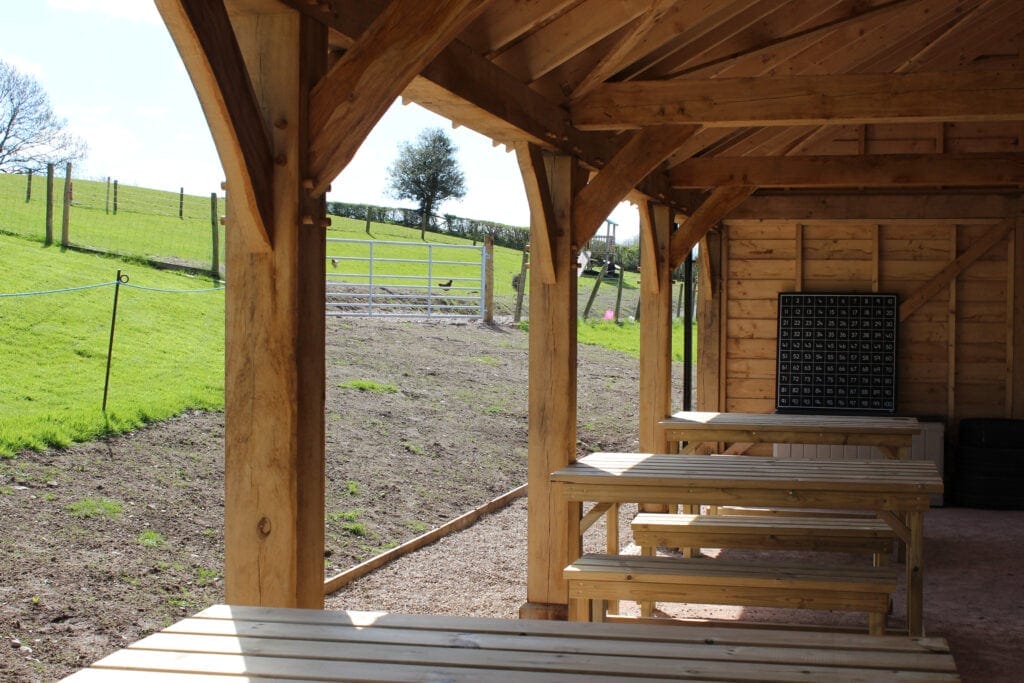
Given the extraordinary natural environment in which Casterton, Sedbergh Prep School is situated, it is perhaps a natural progression for the school to invest in providing a new, purpose-built, outdoor learning space to further benefit from its surroundings. Construction of the Den started just before Christmas 2022 and was completed late February 2023.
The Den is a robust, multipurpose, facility featuring solid oak timbers and open sides looking onto the surrounding countryside. One side of the Den is slightly shielded by a grassy bank that has been ear-marked as seating for concerts and recitals. Depending on the day, if you listen carefully in the Den you can hear either the chickens in the next field – or music recitals across the School grounds.
Pete Burrell, Year 2 teacher and Pre-Prep Co-ordinator, has been tasked with promoting the use of the Den across all curriculum areas – an opportunity that he has relished. As a keen outdoor enthusiast, he has seen the way his own children prefer to be outside and he’s a passionate believer in learning out of the classroom.
“The Den has had a lot of use from Pre-Prep, who love it – Reception, Year 1 and Year 2 are big fans. I took the pupils to the Den recently for an outdoor learning activity focused on construction – and it was raining heavily. It was brilliant! The children at Casterton are used to being outside. They’ll go outside whatever the weather, but on this occasion everyone was able to stay undercover and enjoy the space.”
Learning, Health and Wellbeing
Building the Den at Casterton was inspired by research showing that outdoor learning activities can develop personal, social and thinking skills, communication and problem solving, and foster an awareness and deeper understanding of the natural environment in children. There is even evidence that if you simply teach an ‘indoor’ lesson outdoors, this change of environment has a positive impact on children’s learning. Children are more motivated to learn and they’re happier and more engaged when they’re outdoors.
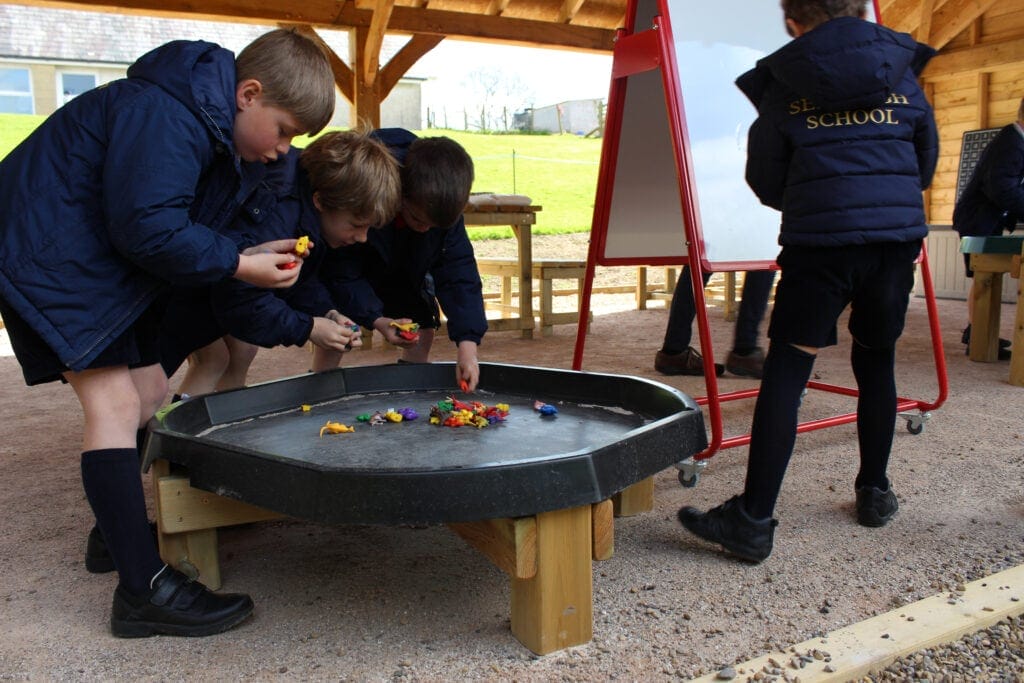
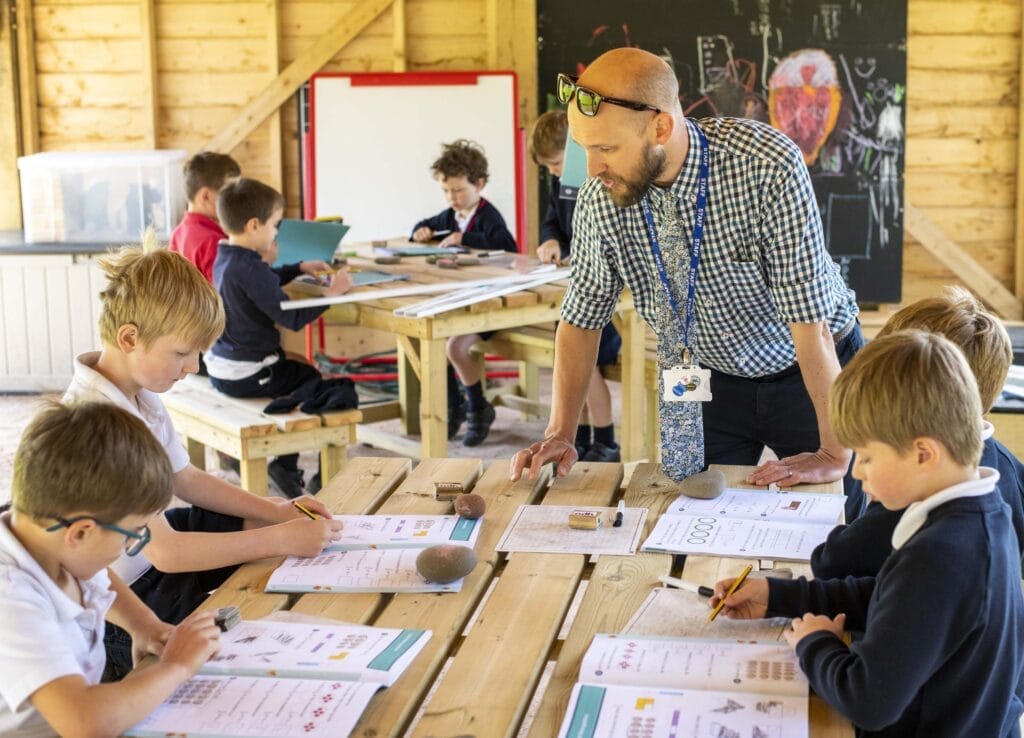
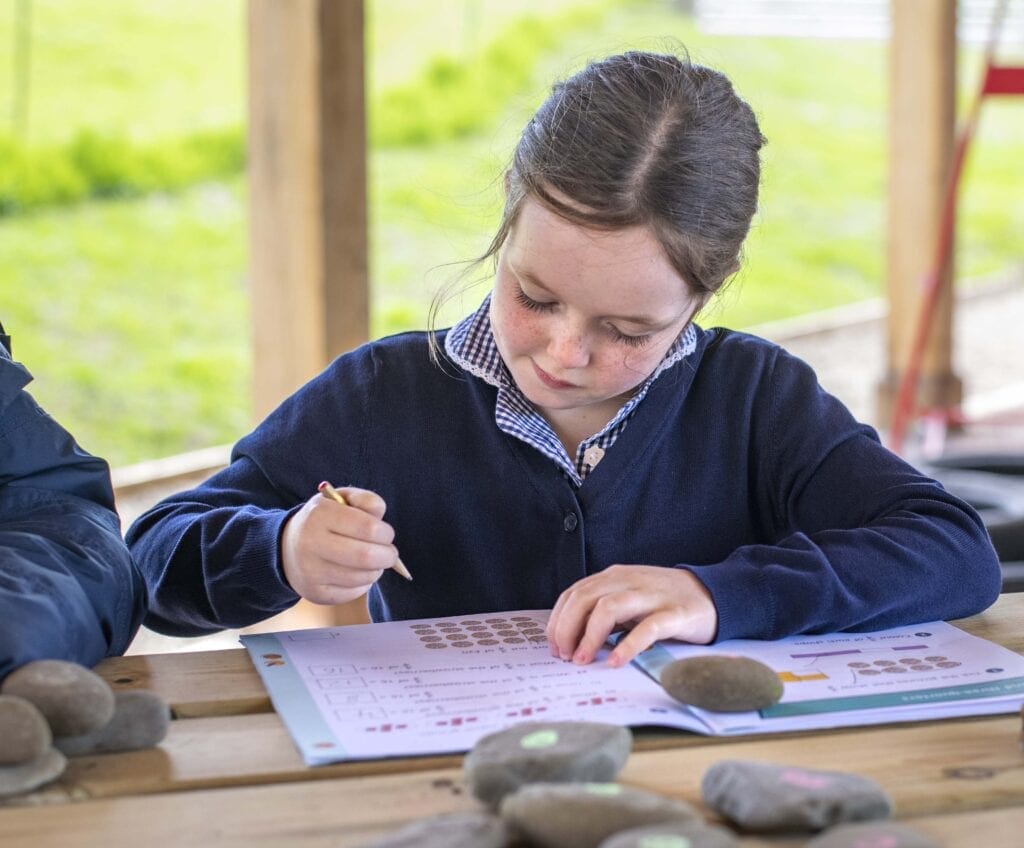
Broadly speaking, there are two ways to teach using an outdoor space; firstly you can simply take a class that you would teach indoors and take it outside. Regular teaching outdoors can have some challenges – for example, things might blow about – so, being a pragmatist, Pete has installed a big tub of rocks to weigh down paper and books.
Pete has been very excited by the lateral thinking that has been inspired in maths classes he’s taught in the Den. He finds that teaching outdoors offers unexpected and welcome opportunities for learning which can only come from removing lessons from the traditional classroom setting.
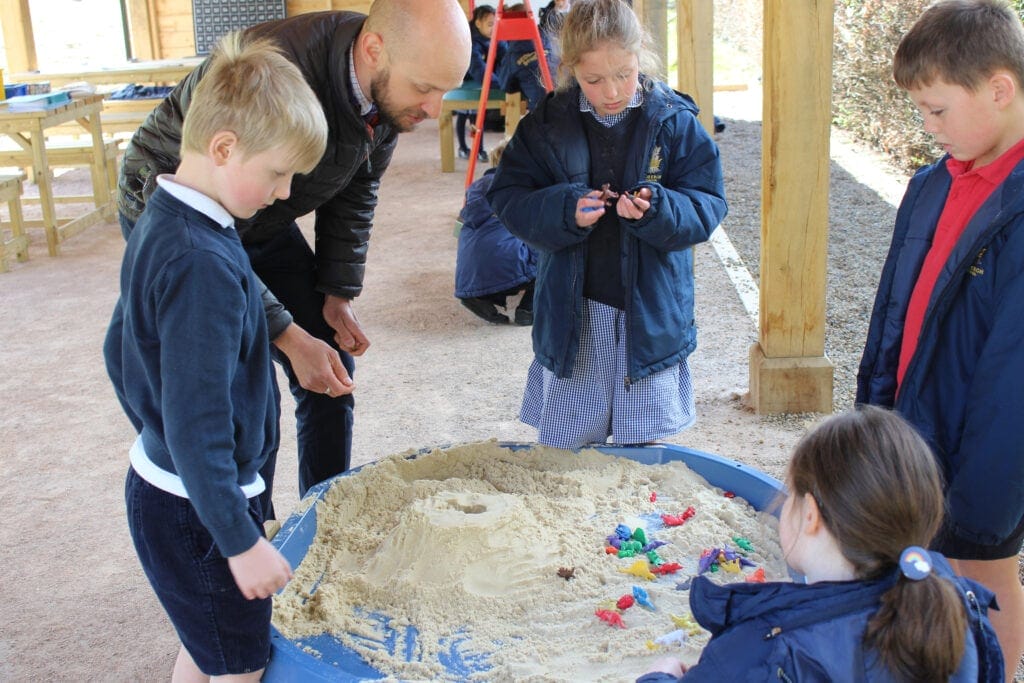
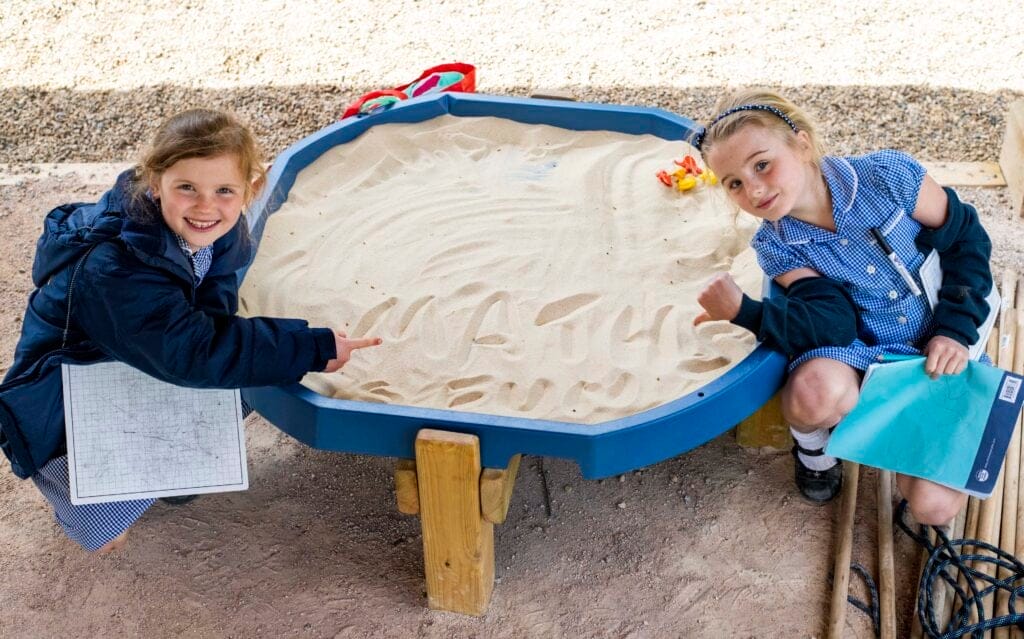
“I’ve been introducing fractions to Year 2 – a difficult concept at first for some. We’ve had several lessons now and the children are making great progress working in groups, with their regular books, and with objects in our big moveable trays. But the most incredible learning was when I gave the children a long length of thick rope in the Den and challenged them to show me where the middle was – i.e. find a half. We couldn’t have done the exercise inside a classroom, but with the freedom to move about freely and actively try a variety of approaches, the children tested their ideas until they worked it out. I was blown away by how they thought outside of the box.”
The second approach is teaching or activities which have been tailored to take place outside – using resources that you wouldn’t otherwise use inside. This approach is more challenging and it involves learning to teach differently; it is a transition.
“We have an amazing outdoor environment with endless learning opportunities, not just in the Den, but across the whole campus. You can almost think of any lesson that you wish to teach and there will be something or somewhere outside that would work.”
“We are already looking at creating a water wall, with water coming down through pipes; we’d have different things that can dam the water, stop the water flow. The water can flow into trays with sand, stones and natural materials. With something like this you can teach gravity, volume and capacity, you can teach about erosion and you can teach about rivers. It is hands on, immediate and immersive – and above all, fun!”
Cross-curricular Learning
Pete’s ambitions for outdoor learning at Casterton, Sedbergh Prep School don’t stop with the Den.
“I’m investigating whether we can introduce cross-curricular activities like building living willow sculptures. There are also clear opportunities for design technology to be involved – for example in building the water wall – and of course, our science department is already very used to outside investigations and learning.”
The potential for extra-curricular learning activities is also endless; the School is looking at rewilding spaces and using existing planters for gardening club, investigating plants and encouraging pollinators. It is possible that an old, drained pond will also be reinvigorated to encourage mini-beasts and create a variety of habitats to be explored.
The Den will be officially opened on Friday 26th May by Will Newman, Headmaster and The Friends of Sedbergh Prep School, whose fundraising efforts have supported the development of this inspiring and ambitious new space. Parents are invited to attend the opening and can RSVP here.


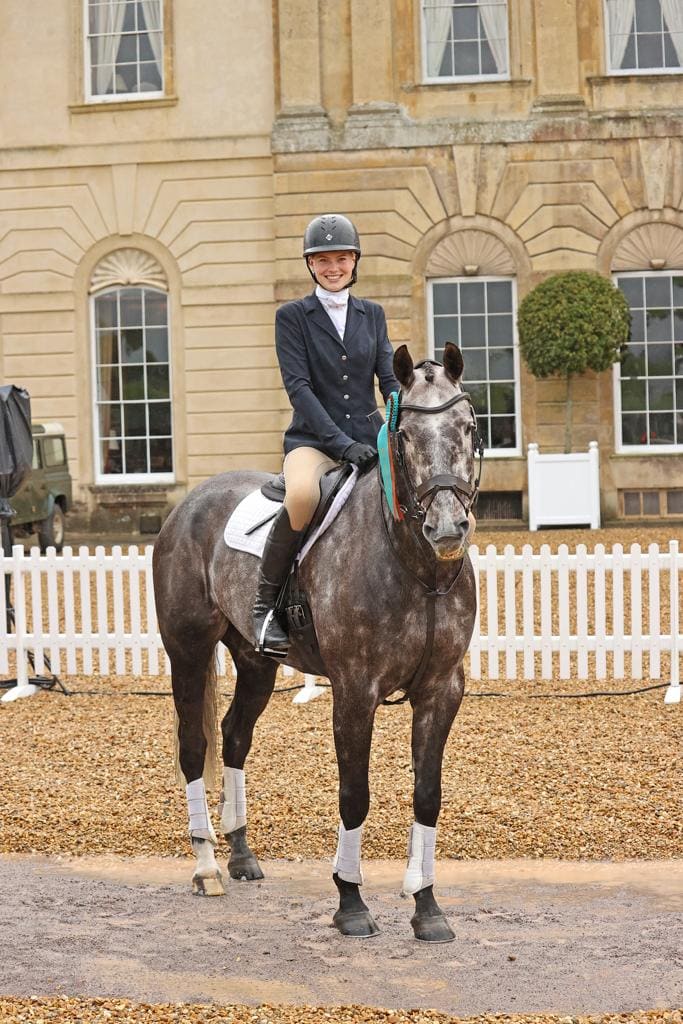
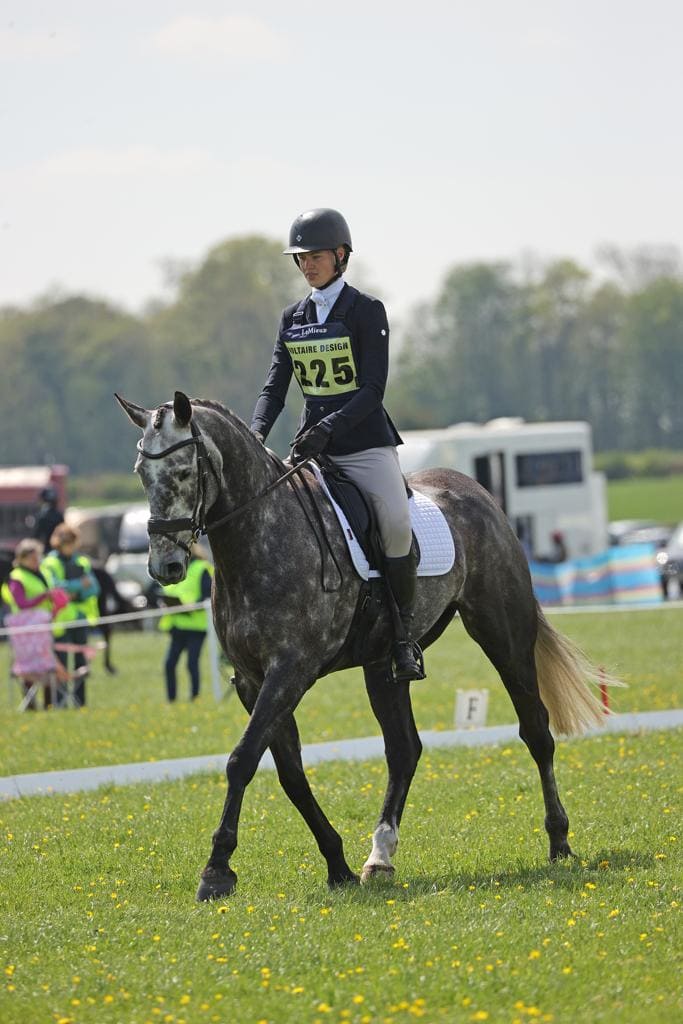
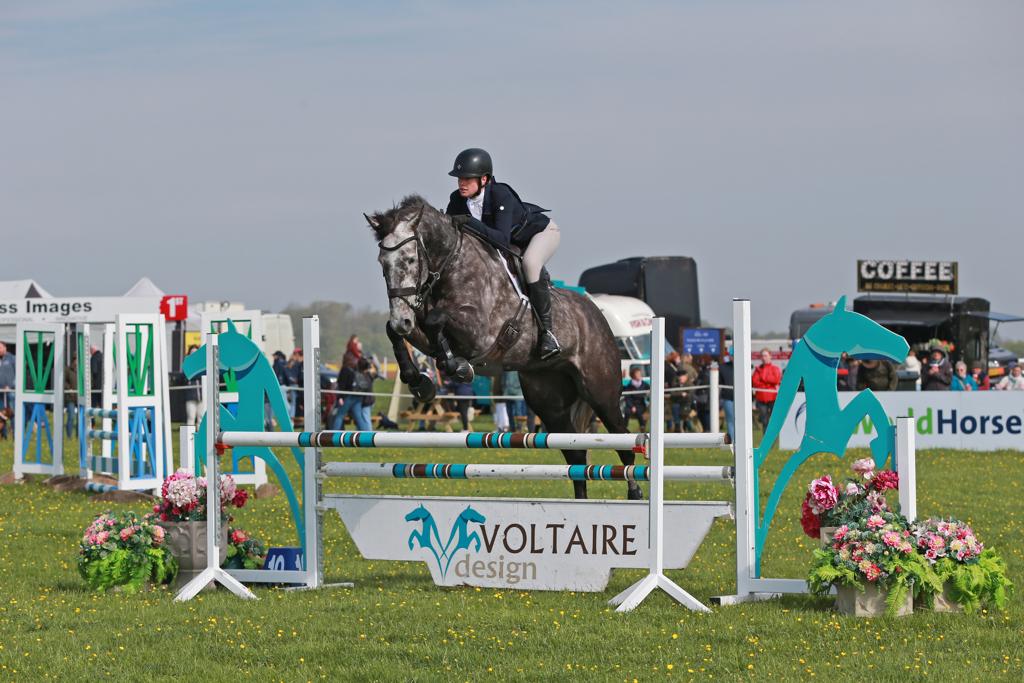
The Badminton horse trials are one of the star highlights of the eventing calendar. Year 13 Sedbergh pupil, Katie achieved a dream ambition when she came 3rd out of a field of 43 riders. The event attracts riders from across the UK and also abroad. Katie, drove over six hours to get to Badminton – to an event she says that she has been training for her whole life.
She doesn’t mean that literally – or at least, not entirely! She has been riding since she was two years old and everything she has done has worked up to being capable of riding an event like this. It takes a lot of training; your horse has to be super fit and prepared for the event – and so do you. There’s no way this is an event that you can just turn up to.
The competition was run over 2 days and Katie had no expectations, but after the first event when she knew she’d done well she was uncharacteristically nervous going into the last 2 events. Fortunately though, she has an excellent relationship with her horse, Solitaire King, and that trust helps. Katie started working with her young horse, Solitaire King, just two years ago. By riding standards, that isn’t a long time. He’s a young horse and Katie says having worked with her mum to train him [Solitaire King] from scratch has made her success even more special; his performance is all down to their hard work.
Training is a big commitment. During term-time, Katie’s mum takes her out of boarding twice a week to compete and to train at her home, 2 hours away from Sedbergh, near Newcastle – which is where Solitaire King is stabled. While he could be stabled closer – Sedbergh has their own stables – its a choice Katie and her mum have made. Katie’s mum, herself a renowned competitive rider, is integral to Solitaire King’s training – and she loves working with him. During school breaks Katie rides two horses most days.
Katie is grateful to Sedbergh School who, she says, have been enormously supportive. Fortunately, Katie says says she is a hard-worker and that’s part of the agreement she has with the School and with her mum – if she wants to come out of boarding to ride she has to keep her grades up. Not being able to ride is something that Katie says she doesn’t want to happen! So, she makes sure her grades are good!
As you’d expect for an elite, competitive athlete, the sacrifices have been many. Over the years, Katie says that missing the School’s weekend social activities has been a bit hard, but riding is what she loves. Riding is an escape and although sometimes its been hard, overall she hasn’t minded it – it’s been a good thing. Katie is also vice captain of the netball team. The occasional clashes between netball and riding commitments have to be weighed up to decide which one she’ll do.
When she finishes her A levels in a few weeks time Katie is taking a year out to travel and to ride – she’s aiming to compete at another top event, Blair Castle International Horse Trials, this summer. After a year out she hopes to study psychology at a university near to home.
So far, Katie hasn’t followed any of the pathways typically followed by high-level riders; for instance, many riders of Katie’s standard are home-schooled. However, with her mum’s knowledge and experience of eventing, Katie and her mum have managed Katie’s journey whilst she’s been boarding. With her A levels nearly finished but she’ll be seeing how everything goes.
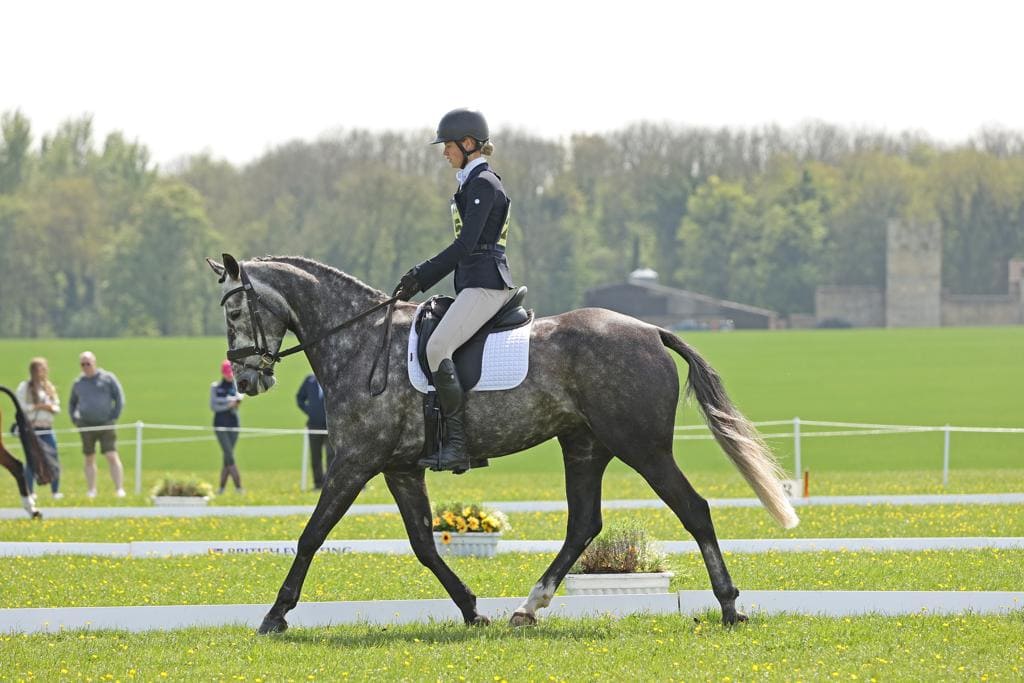
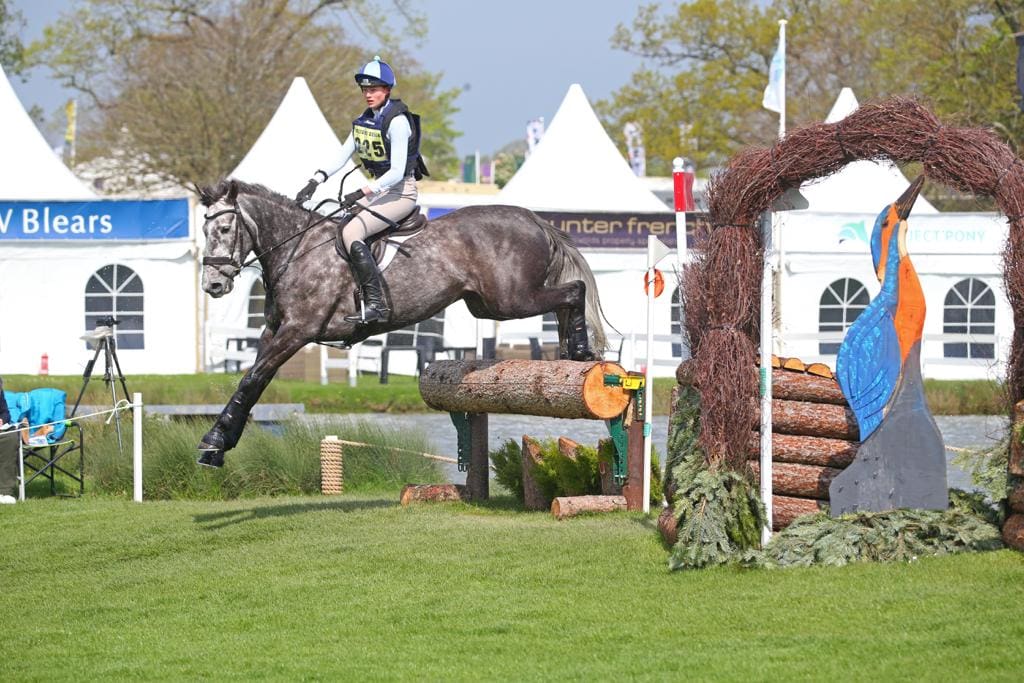
An important objective of Sedbergh School’s Art Department is to develop visual literacy by encouraging and supporting imaginative and perceptual abilities through a variety of media. Under the direction of Head of Art, Laura Bolton, the Art Department is a hub of artistic flair and imagination. One of the Department’s brightest and most inspired stars is Year 13 pupil, Jolly. Laura Bolton, herself a celebrated and award-winning painter, has taught Jolly for five years.
“Jolly has been fascinated by people and faces since a young age. She depicts her subject in a highly realistic way. Jolly’s exceptional colour mixing and her eye for detail is very apparent in all her paintings. She confidently records the feature of her subject matter and cleverly uses warm and cool hues with her colour mixing to portray her subject.”
Laura Bolton, Head of Art
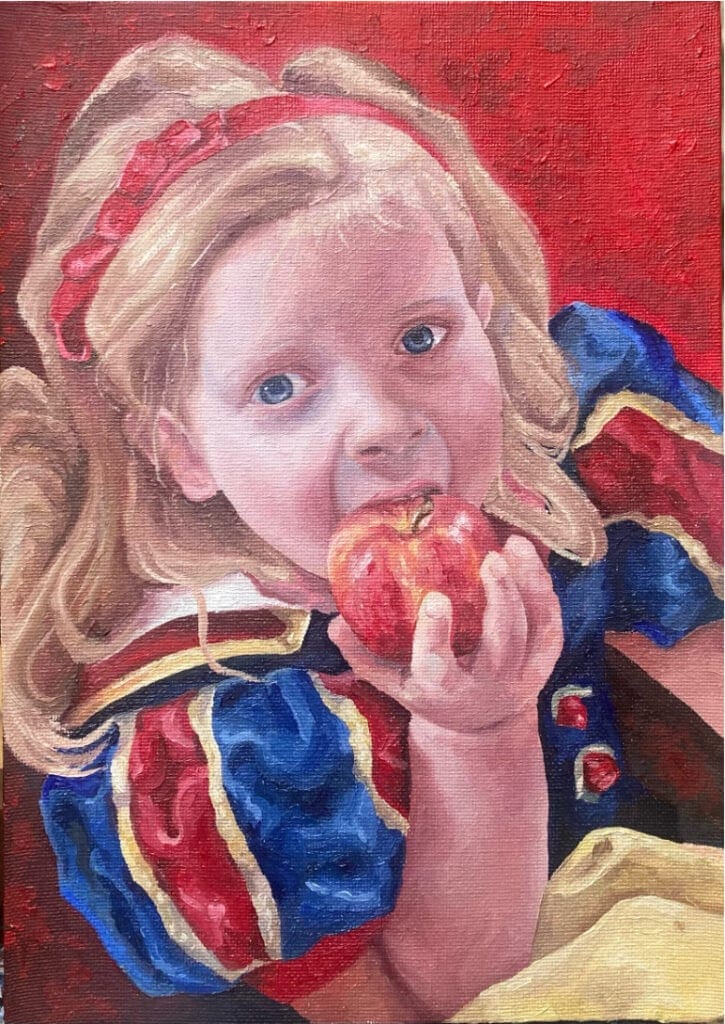

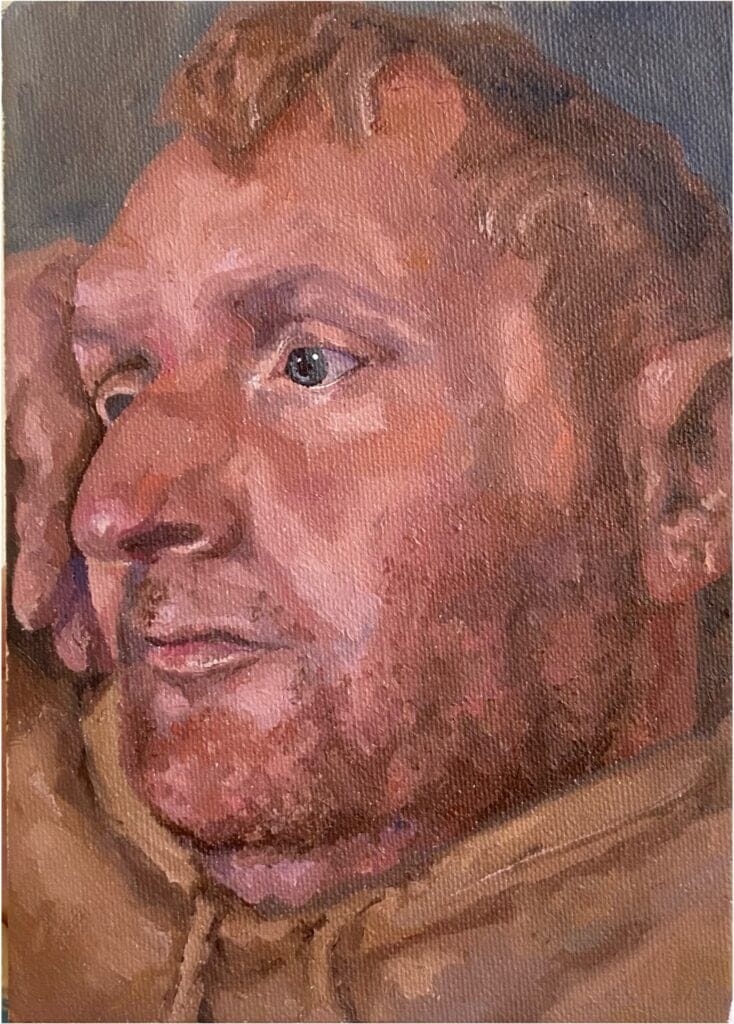
Jolly prepared this exceptional folio of work in response to Component One, The Personal Investigation aspect of the A Level course. Despite also being an accomplished photographer, for this folio of work Jolly chose to hone her skills using drawing and oil painting.
The visual arts allow Jolly, who is generally not verbally expressive, to display a huge amount of emotion and express her thoughts. Painting allows Jolly to be bold, which is evident in her well thought out compositions and the colour pallets she adopts in her work.
Laura Bolton, Head of Art
“I have purposely used bright colours to achieve a cheerful look to the paintings in doing that, the use of colours helps to bring out emotions or lack of emotions for example the use of dull colours for the twins make the figures look more concerning and lifeless as they should be.”
Year 13 Art pupil, Jolly
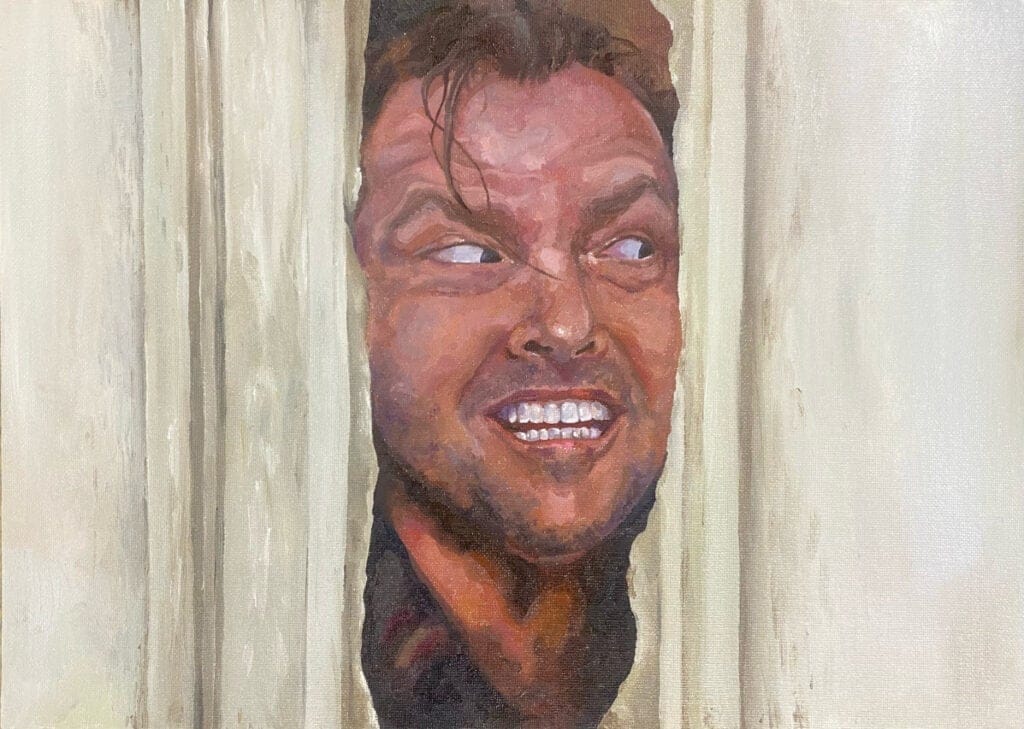
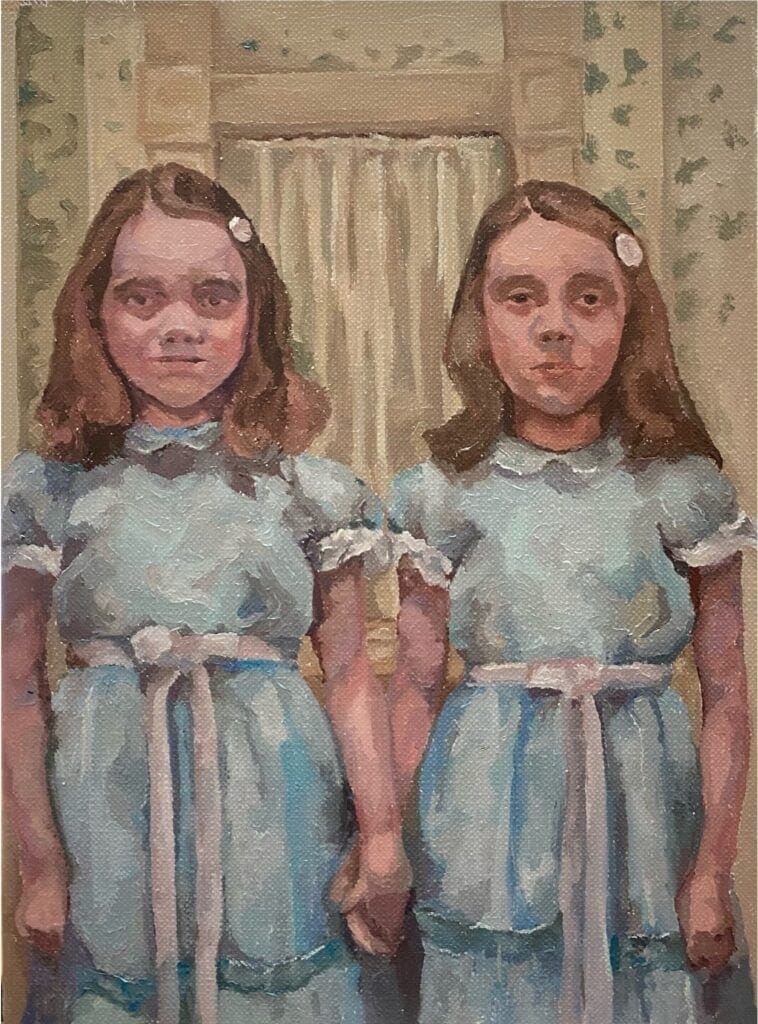
Art is powerful and Jolly manages her gift with the utmost humility – a core value of Sedbergh School. The work in this folio has been on display at an exhibition at Farfield Mill and in the School’s main reception. We believe that these paintings will have a lasting impact and leave a legacy that will live on forever at Sedbergh School.
The School of Athens is a pupil-led academic society that challenges pupils to present and defend their thoughts in a supportive group of peers. More information is available on our School Societies.
This week, Year 12 pupil Jack has chosen a topic of personal interest to him and his aspiration to undertake an engineering degree. With ChapGPT frequently in the news, Jack’s presentation captured imaginations and raised a lot of questions. Below is a summary of the presentation and highlights from the audience’s many questions and opinions.
Humans vs Robots: Who Deserves the Job?
While some people believe that robots and artificial intelligence (AI) can solve many problems and make our lives easier, others may be concerned that they may take over jobs, become uncontrollable, or even pose a threat to humanity. So how can automation benefit our society?
Automation and AI can benefit our society if integrated correctly:
- Some job sectors and workplaces can benefit from increased efficiency that enables quick completion of monotonous tasks; increasing workers productivity and reducing labor costs – allowing businesses to flourish.
- One advantage to the use of robots is that they don’t require breaks like human workers and can work unsociable hours.
- Other opportunities for robots and AI is in performing dangerous tasks in hazardous environments that are unsafe to humans. For example, robots can be used to perform tasks such as handling toxic materials.
- Robots are also useful in industry where a high degree of precision and accuracy is critical. Robots and AI can lead cost savings that reduce the cost of products to consumers and allow companies to remain competitive in rapidly changing markets. Having robots undertake this precision work allows workers to focus on tasks requiring more creative and complex skills.
Many people are familiar with services such as ChatGPT and Snapchat AI which can be accessed by millions of consumers globally. These groundbreaking artificial intelligence services are exciting and have the potential to revolutionise and change the workflow within a great number of job sectors, improving the job set prospects and career opportunities for many people. But what will humanity do with this new technology? Will AI be humanity’s savior or its downfall? So, how can automation damage our society?
While there are undoubtedly benefits to robots and automation, it’s important to carefully consider the potential risks and work that must be put in to develop and deploy these technologies to prioritise human ethics and values.
- As automation is increasingly utilised throughout our society, there is an ever-growing risk of job displacement and economic inequality. With up to 800 million jobs set to be replaced by automation by 2030, this will lead to fewer workers having greater career opportunities while many more people are left behind. Robots are not designed with diversity and inclusion in mind and could perpetrate bias and discrimination in sectors such as hiring, lending, and law enforcement.
- Ethical concerns associated with the use of robots, include the rights to privacy, consent and the rights of the robots themselves.
- Robots also lack simple human qualities which are critical in industries such as healthcare where human decision-making, critical-thinking and judgment are necessary.
- There is an increasingly large risk of social isolation in which people may become more disconnected from human relationships and communities – which has a potential to be extremely damaging to our society.
Overall, the debate about robots replacing jobs is complex and multi-faceted. While there are certainly benefits to automation, it is important to consider the potential downsides and ensure the benefits of automation are distributed fairly across our society. Additionally, it’s important to invest in education and training to help people transition to new industries and ensure that they have the skills to succeed in the changing job market. Otherwise, the use of robots in society could cause an unfair distribution of wealth, leaving many people disadvantaged. Hence, it is necessary to consider all the advantages and drawbacks to robots and artificial intelligence before they are infiltrated throughout our society in order to prioritize human values and ethics.
Highlights from the Post Presentation Audience Discussion, Questions and Thoughts
Eventually people and society will adapt [to robots and AI], but at the moment education needs to adapt faster, because the jobs that are going to be available in 2030 aren’t the same that are available now. So while this is a temporary problem, there will still be a large number of people trained for jobs that no longer exist. So there will be unemployed people who’ll have to retrain to then get a job later on.
I think ChatGPT is just the start. I think this is something that’s going to replace essentially everything. In the next seven years, there will be mass change, it won’t necessarily mean that everyone’s going to be displaced, but I think it means that a large number of people are and that there will also be demand for educating people to run these programs.
In finance, where there is a lot of quantitative data, numbers and figures, I think AI could massively change the game. Especially in analysing the financial state of the company and roles like this, AI could provide a huge opportunity for companies to get economic and financial information.
I don’t think AI will affect some sectors, such as medicine. In medicine, for example, I don’t think you can necessarily have an AI system diagnosing you. I think you require human qualities within that sector. I’m also not sure how much you would want to be operated on by AI.
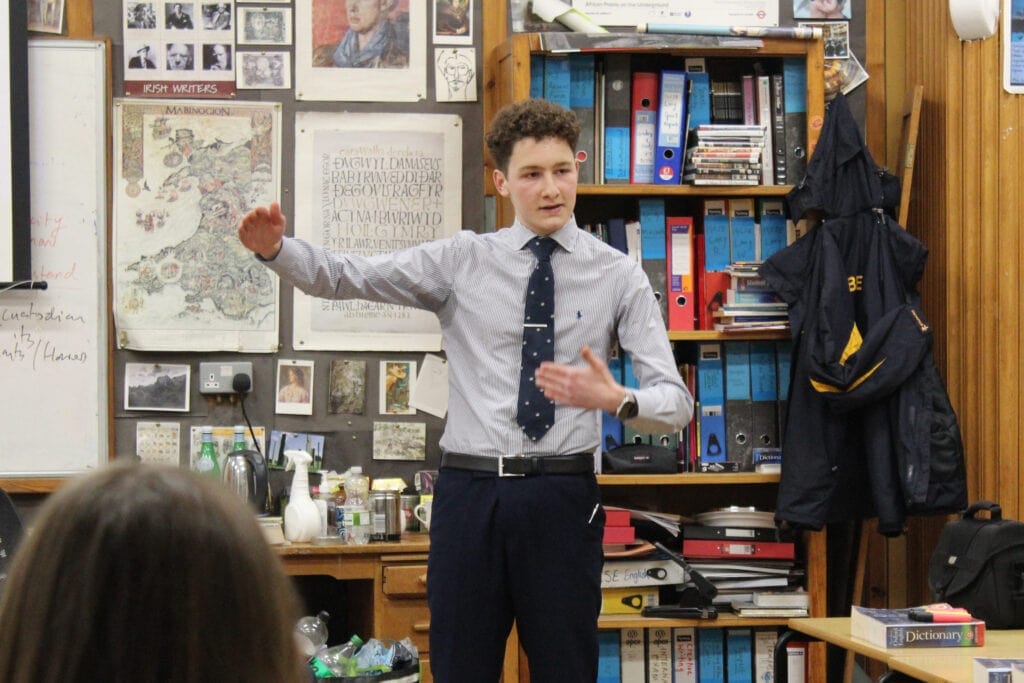
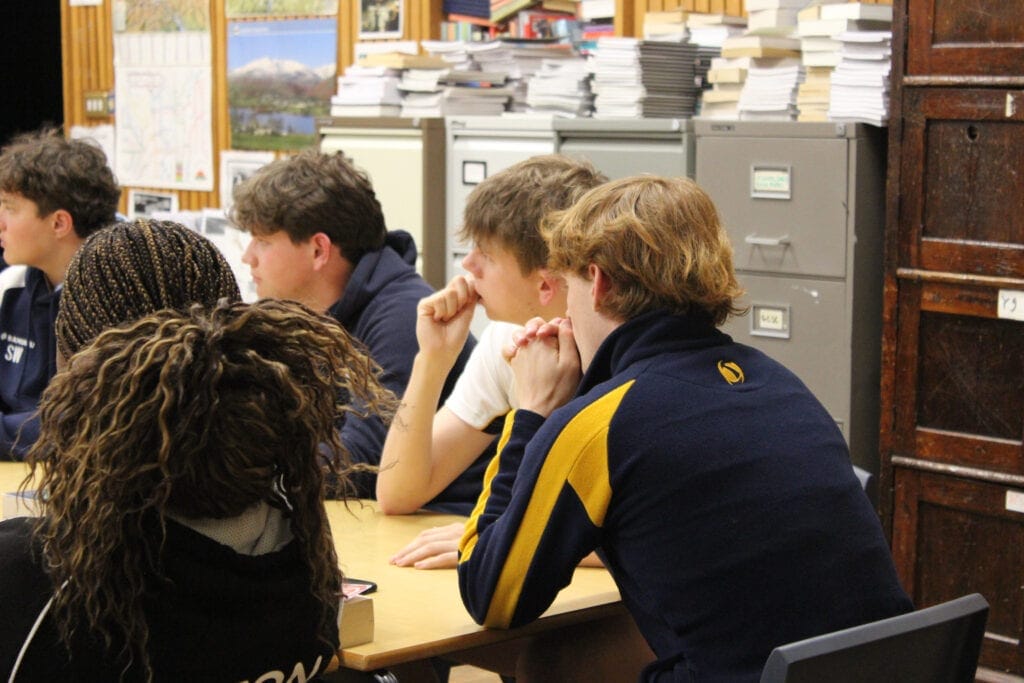
We are delighted to announce that Sedbergh School has won the Boarding Schools’ Association (BSA) 2023 Award for Supporting International Boarders. Headmaster Dan Harrison says, ‘Sedbergh School has a proud history of welcoming international pupils and this award recognises the excellence of the welcome that the whole School extends to our international pupils.’ The goal is to ensure that every stage of children’s transition to Sedbergh is as seamless and exciting as possible; from transition, to settling in, to thriving whilst here – we support every step.
Our welcome is founded in Sedbergh’s HARK values of Humility, Ambition, Resilience and Kindness. Through HUMILITY we place ourselves in pupil’s shoes to recognise what the pupil could be experiencing. That enables us to react with KINDNESS to the pupil’s concerns whilst embedding the AMBITION and RESILIENCE that characterises our pupils – and staff.
When we say that no detail is too small – we mean it. We asked a current international pupil, Clara from Switzerland, about her time at the School.
Would you recommend international boarding?
Definitely, yes. Firstly, it really helps you immensely with being more independent as you are away from your family back home, however, being at Sedbergh and being looked after by a Housemistress and other staff it is like having a second family and it is my second home. As a boarder there is always someone to talk to, if I ever have a question, there is always someone I can ask. The skills I have developed will definitely help me when I go to university. I have made many friends from all over the world like Hong Kong, Germany, France, Kenya and England. It is a completely different experience to what I was used to back in Switzerland and you get to meet a lot of people from different backgrounds and cultures. Sedbergh is a great place to live and study.
Would you say that your time at Sedbergh has helped you toward your goal [of what you want to do after you finish school]?
I would say it definitely helped me because it’s way more independent learning. Here [in England] I have more homework with prep, which helped me. I’m quite good at self-learning and it helped me to organise my timetable. It has been great preparation and giving me skills I will need for university.
Did you use the EAL services?
Yes. I’m doing the IELTS exam. IELTS is really good because I’m thinking about going to university in England and for that I need to meet the English language standard. Having IELTS will also set me apart from other people when applying for further education. Having a certificate will also help when applying for jobs in order to prove my English level. I have received a lot of support from the EAL department at Sedbergh in preparing me for IELTS.
Did you feel that your academic talents were recognized and celebrated?
They are definitely celebrated in the school, during assemblies and on the boarding houses. I really like the reward system at Sedbergh, we don’t really have things like merits [in Switzerland]. I performed very well last term and was invited to the Headmaster’s commendation drinks which was a lovely evening. These events really motivate me to try my best.
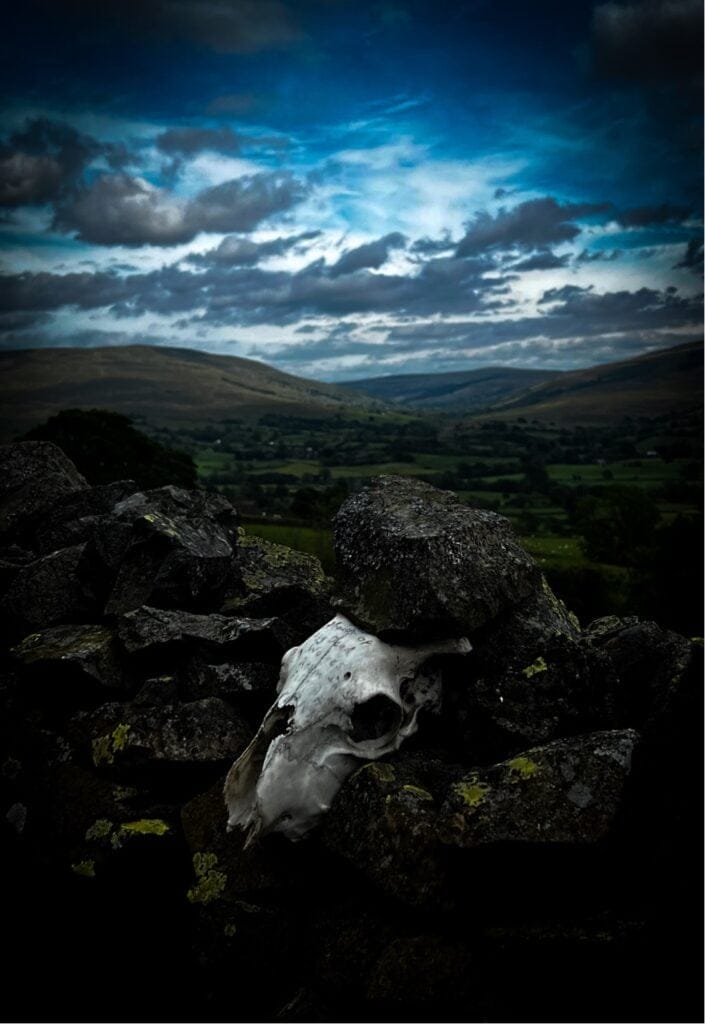
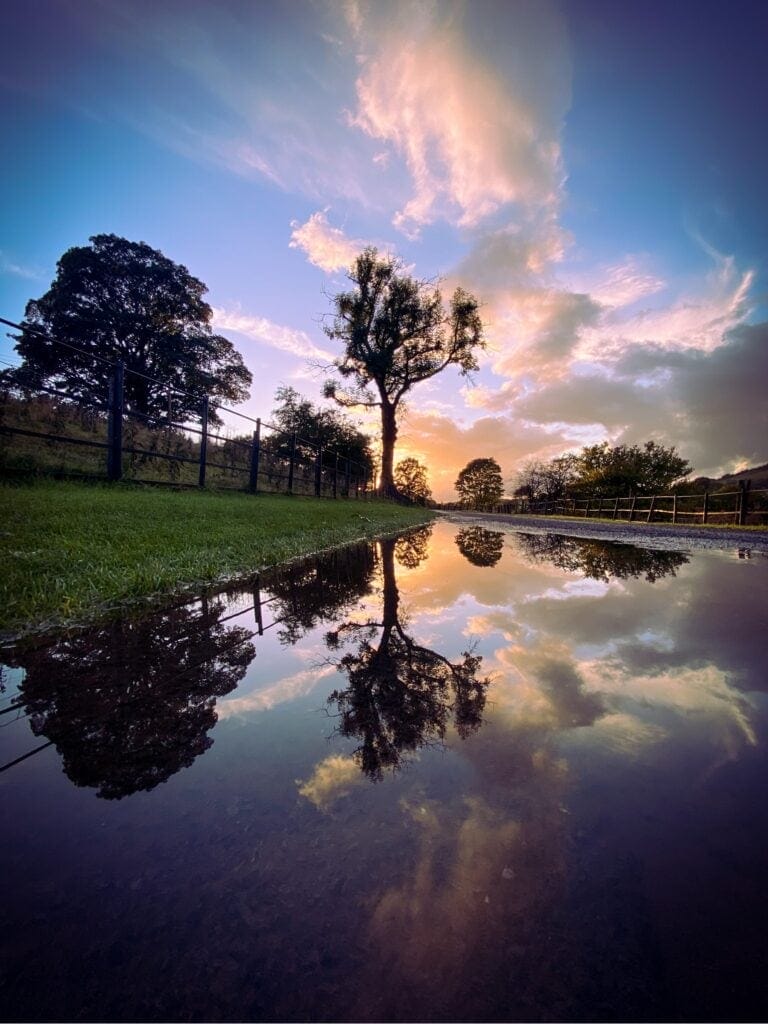
Sedbergh School is privileged to sit within the Yorkshire Dales National Park, near the border of the Lake District National Park, whose unique mountainous landscape of narrow glaciated valleys, shaped by 1000+ years of agro-pastoral land-use, is recognised by UNESCO World Heritage Convention as having ‘extraordinary beauty and harmony’. This remarkable landscape serves both as a canvas and a source of inspiration for Sedbergh pupils. Laura Bolton, Head of Sedbergh School’s Art Department is a passionate believer that art cultivates our senses, making us visually aware and visually literate, enabling us to interpret the world around us.

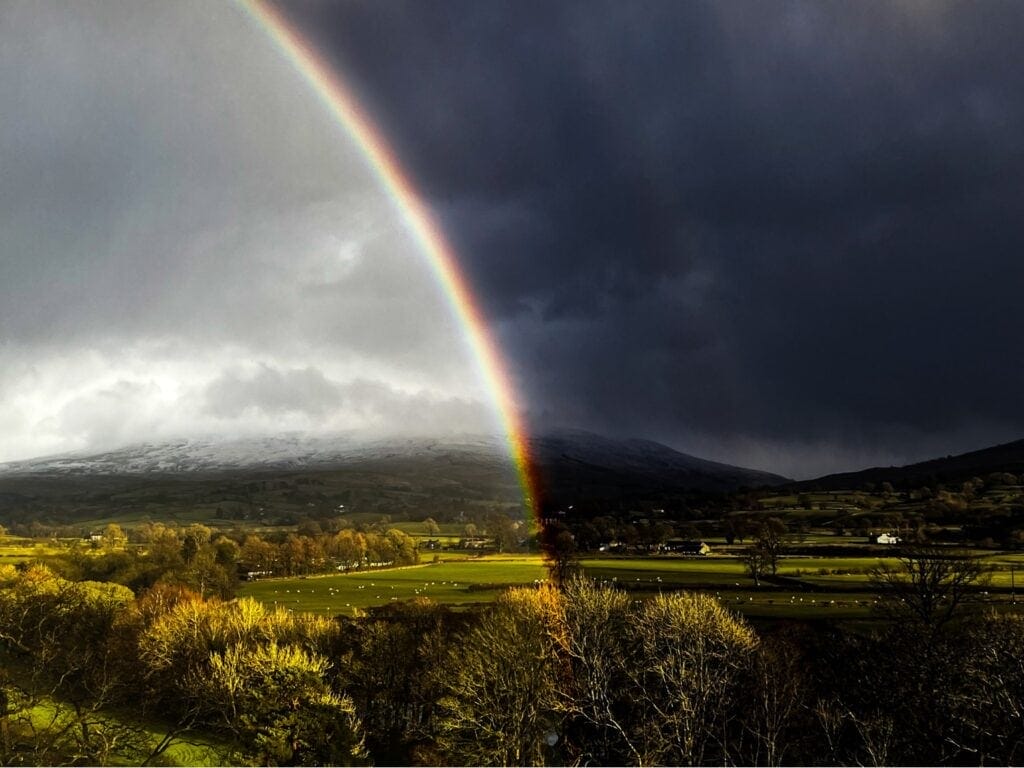
“Recording and engaging with this visual world around us is vital to us all, providing a spiritual haven for the photographer. The aims are not merely just to make memories but to portray scenes that have strong environmental messages and highlight key issues such as climate change. No, work embodies this more than the extraordinary photography of Year 11 GCSE Art pupil, Evan. In Evan’s work we can truly see that the possibilities of recording the environment and experimenting with the image are endless.”
Laura Bolton, Head of Art
“The inspiration for my photography mainly comes from the natural surroundings here at Sedbergh school. I love to capture the moment in time that has never been seen before and will never be seen again. One of the main focuses in my photographs are the clouds that are ever changing and can create some amazing uniform shapes.
To study Photography at Sedbergh is amazing. I love creating my own images and sharing them with the class. We all motivate and give feedback to one another which helps us all to become better photographers.”
Year 11 GCSE Art pupil, Evan