





Month: November 2023
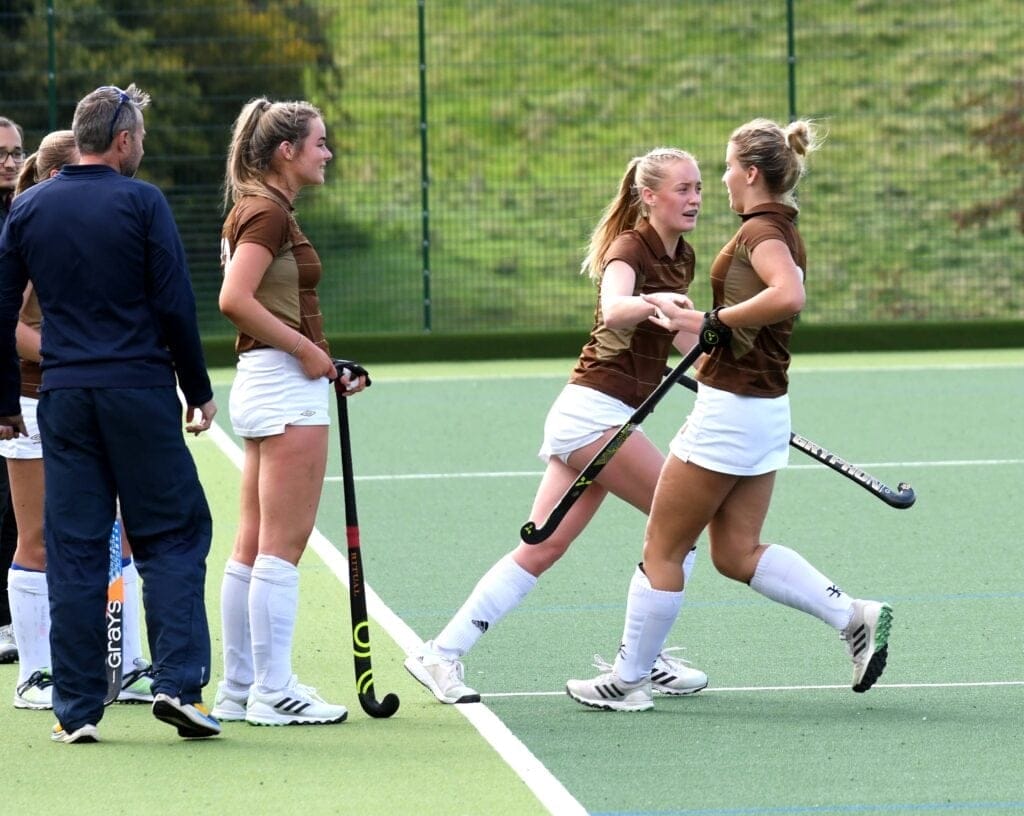
Hockey is an enormously popular sport at Sedbergh School and in addition to team success across different age groups, Sedbergh players have gone on to prestigious hockey scholarships at universities in the United States. During the season, we have 13 hockey teams at the School; seven girls teams plus our club team, which plays in the local league. We also run five boys teams.
Nick Davey, Director of Hockey, talks through the philosophy of hockey at Sedbergh and his belief in the need to be free to make mistakes and to make decisions knowing that the School and coaching team are 100% there to support players.
A highlight of this year is that with the completion of our two Newfield pitches we’re really forming a style of play from year nine right the way through to the senior teams.
The Newfield pitches are allowing us to play a quicker game and they’re allowing us to train more often. As a result of that, I’d say our teams are much further along in terms of their own individual development and their understanding because the girls are able to train on the pitch more often with each other and therefore they’re a lot more connected.
We want to play really attacking hockey at Sedbergh and what that means is we want to look to play forward, we want to look to play over shorter distances with passing but really support each other to move the ball to see our girls and boys using all of their skills and being really creative and that means probably being quite brave. We want to be as attacking as we possibly can; all of the pupils are really buying into that as a style that we want to play.
Whether it’s being brave or having freedom and creativity or at least to not worry about the fact that it might go wrong, we want all of our pupils here to play with as little, or zero, fear of failure or of making mistakes. We want them to feel that the coaches, their teammates, everybody at the school are going to completely back and support them.
Whether it goes well or not, if the attitude is to go out and really grasp opportunities and to see moments where they can make a difference, we’d would much rather our pupils go for it and try to do the positive thing wherever possible. That is the best way that we’ll get ’em to stretch and for them to find out about themselves and to discover new skills. No one gets better at things unless they’re willing to try it and to try it under pressure. Sometimes in games is the time where you find out how good they are and I think that’s something that we try really hard to support the boys and girls to have that lack of fear, that real bravery to go forward and to look to score as whenever they possibly can.
The philosophy for the school is that we want our players to be able to think for themselves. We want them to be able to read situations and for us to really facilitate them in doing that. We are there to guide, we’re there to support.
We don’t want to be in a situation where we are tying them down too much with parameters and rules and we want them to show their own individuality whilst they’re playing their sport and to really enjoy it and all of those things are bound up. Ultimately we are there to help them get the most out of their hockey and I think the best way to do that is to allow the children to play and to feel that they have that agency to make decisions for themselves.
We’ve had a lot of very successful players, players who’ve played for England and players who have gone on to the U.S.
The lucky few if you like, who really are in a position to test themselves against the best, the only way they’re able to do that is to have the confidence to go and play as close to the highest level of their abilities they possibly can and that has to be supported by an environment where they train in a way that gives them the confidence to be able to do that. Those players generally have been very highly motivated themselves, but they still have the same worries, anxieties and nerves as all the rest of us and so certainly my job for all of our pupils is to really help them have the joy for the sport and that comes from pushing themselves, putting themselves into situations that might challenge them and seeing what happens next and then we’re either there to celebrate with them or to commiserate with them either way. As long as they know that we are there to support them.
2023 Head of School and Captain of the Shooting Team, Livi is studying geography, geology, and history. Livi envisions pursuing a degree in Geography at university, having received promising early offers. She expresses her passion for exploring diverse cultures and landscapes, shaped by a lifetime of travel.
Initially met with a bit of skepticism from her family regarding the value of a Geography degree, Livi successfully persuaded them through thorough research into her chosen academic Pathway.
Livi’s approach to her endeavours reflects her commitment to giving her full effort. She acknowledges a fear of spreading herself too thin and prefers dedicating 100% to her pursuits. Collaborating closely with her best friend, the Captain of Small Bore Shooting, proves crucial. Livi values the support and leadership of her friend, who steps in when she is occupied elsewhere, ensuring a cohesive and effective team dynamic.
What do you think that you have learned so far as head of school?
I didn’t think that I could be appointed Head of School so when I got the call from Mr. Harrison, I was like, what? Are you really serious? So, I didn’t have any expectations about the role.
I think a lot of what I’ve learned so far [as Head of School] is about people skills. You’ve got to deal with situations quite quickly and you’ve got to think about people; the pupils as well as the teachers. I think it’s also important to have your ear on the ground the whole time because you’ve got to have an idea of what’s actually happening within the school. It’s getting that balance between being a role model but also being someone’s friend as well at the same time.
I’ve been going around all the houses for lunches and its fantastic getting to know all the younger pupils especially. I would hope they see me as a role model, but then I don’t want them to go, oh my gosh, it’s all scary. I don’t want to be scary to them. So when I go to lunch I don’t go, oh, I’m Head of School. I just sit down with them, have a conversation. I’d rather them be themselves around me and have a proper conversation instead of being like, oh my gosh, who is this?
What I find the most fun is I love going down to all the matches and being there to support the teams. I’ve been to hockey matches and rugby matches and I’m hoping to be at the first home game of our girls’ rugby team in a few weeks.
The most rewarding aspect [of the role] would probably be when something is going wrong and dealing with it; realising that I have learned so much through my years of growing up. I’m still growing and I’m still coming into all these new situations, but it’s rewarding using stuff that I’ve learned through situations to educate people on how to reflect and deal with problems because year nines (and everyone) are still learning.
How different does year 13 feel compared to year 12?
It does feel like quite a big step up, but I think it was already quite a big step up coming into sixth form from year 11. But it does feel like you’re treated slightly differently, which is quite nice. You are more like an adult and everything’s more up to you. It’s your own decisions and you’re less guided, which is actually good because you are leaving in a few months, so you need [to get used to] that sort of independence.
Do you know what you’d like to study at university?
I’ve applied to go and do geography; I’ve got 3 offers at the moment. At four of the universities I’ve applied for physical geography and then one of them is just pure geography. I’ll kind of cut it down as the year goes on.
Why that pathway?
It sounds silly! But its because I don’t actually know what I want to do yet in my life, I can’t choose. I don’t want to go and be a doctor. I don’t want to go and be a vet. Geography is my favorite subject and you can really go and do anything with it. It just gives me that foundation and transferable skills so that I can go into any career really.
How did you become aware of this pathway?
Mr. Winterbottom taught me in year 11 for my GCSEs and I never really knew if I wanted to do geography or not. He encouraged me to look at the different careers that it can lead to. Then I interviewed someone from the UN, and a family friend who’s into conservation, they both did geography and and that gave me an idea that there are careers that I can go into with a geography degree.
What have you done to educate yourself about geography as a pathway?
I did these interviews and I also just did extra reading. I grew up also watching the David Attenborough documentaries and stuff like that. I think I was just talking to teachers, geography teachers.
And I was also lucky enough to get snuck into a geography lecture at Cambridge through connections and I sat there and I was like, I could actually see myself – maybe not at Cambridge, we’ll have to see – but actually just doing that degree. And I was like, okay, I can do this. Meeting the geography students too helped me to visualise myself studying for a geography pathway because I felt comfortable with them.
How is Sedbergh helping you to be successful?
I think Sedbergh is helping me to be successful because it gives you the holistic foundations and the people skills to go on with life. It’s not just academic, academic, academic, it’s really giving you the whole package – people skills and work-life balance and everything. I think that’s quite critical when looking into the future.
What do you think has been the most useful preparation for a Geography pathway?
I think what’s helped me most for the preparation for geography is doing those interviews, talking to the geography teachers. I’ve been mentored by Mr. Barnes who’s been really useful. He [Mr Barnes] sat me down with extra reading articles, helped me with my personal statement. I think that’s been really good.
For my EPQ I interviewed someone in the Netherlands government and learning the key skills of interviewing, and having the confidence to do it, was really good. It’s not just being stuck in books. You’ve got to go and actually do something like that.
I was a member of the National Geographic, so flicking through those articles, looking at all the photography and just having that wider understanding of what actually is happening in the world. I think sometimes you kind of get stuck in a bubble when really you need to have a broader understanding of what’s happening.
What challenges do you feel that you have in your journey?
I guess no one’s perfect and they’ve always got a challenge and that’s just human. I’ve really struggled with my public speaking and so for me it was quite a big thing becoming Head of School. I kind of floated through Sedbergh, under the radar, just doing my academics, my sports, and then all of a sudden I was put on a pedestal [as Head of School] and that’s kind of really taken me out of my comfort zone, which I think is really important. I think you do need that and I’ve had a lot of support from my friends who know that I do struggle and I think that’s been really good and I think my public speaking hopefully has improved.
What is your favorite thing about boarding at Sedbergh school?
My favorite thing about boarding is that you’re always surrounded by friends and you’ve got that support system and that community to always go back on, but you can still get your time to yourself when you need it. But I think that is really important and I think going and looking at university, I think having that boarding and being away from home will help me. I will be more independent and won’t get as homesick as easily.
What is the most valuable lesson you’ve learned at Sedbergh School?
I think the most valuable lesson I have learned is that you’ve got to have that balance. You can’t just be stuck in books or stuck on the sports pitch. You need to be able to balance both because you’ll never be happy if you’ll just get down into a rutt. You’ve got to go out with friends and have that holistic education.
How important is sport to you?
Sport has really helped me. I’ve built this community not just within school but with other people in school and going on tours with a bunch of people that I’ve never met before except for maybe a weekend. It’s just having that skill to get along with them and I captained them and I think you’ve got to learn to deal with a whole group of people. I think sport does help you with that, that you’ve got to deal with the team.
Also in independent sports, such as shooting, it’s not just a team, it’s also talking about you and it’s all mental. It’s not just the skill of it, but it’s also the mental preparation. And for me, I do get stuck in my head quite a lot and I do need to just think, relax. I do use sport to kind of get away from my problems. So I kind of put on my air defenders and focus on looking at the target and that’s how I use it to relax really.
Resilience is the third of our HARK values. Resilience is the ability to adapt, bounce back, and recover from adversity, challenges, or setbacks. It is the capacity to withstand and navigate through difficult situations, stressors, and changes while maintaining your overall well-being and psychological health.
Humility | Ambition | Resilience | Kindness
Resilience is one of our core values because, more than anything else, it’s what determines how high our pupils can rise above whatever setbacks they encounter both during their time at Sedbergh, and after: from battling an illness, coping with grief, or managing financial stresses to name a few.
There are individuals who seem to ‘bounce back’ from negative events quite effectively, whereas others are caught in a rut, seemingly unable to get out of their negative streaks. Being able to move on despite negative stressors does not demonstrate luck on the part of those successful individuals but demonstrates a concept known as resilience.
Fredrickson/Tugade (2005)
What Does Resilience Look Like? Top 10 Behaviours
Resilience is characterised by a set of behaviours, attitudes, and coping strategies that enable individuals to adapt, bounce back, and thrive in the face of adversity. Here are some behaviours that commonly characterise resilience.
Below are a set of behaviours that resilient people typically have – these are things that you can practice.
- Positive Mindset: Resilient individuals maintain a generally optimistic and hopeful outlook – with a sense of humour – even in challenging situations. They focus on solutions and possibilities rather than dwelling on problems.
- Adaptability: Resilient people are flexible and open to change. They can adjust their thoughts, behaviors, and strategies to fit new circumstances and challenges.
- Problem-Solving: Resilient individuals approach problems as opportunities for growth. They analyze challenges, develop strategies, and seek creative solutions to overcome obstacles.
- Effective Communication: Resilience involves being able to express emotions, seek support, and communicate needs clearly and assertively.
- Self-Care: Resilient individuals prioritize self-care and well-being. They engage in activities that promote physical, mental, and emotional health.
- Resourcefulness: Resilient people are resourceful and can make the most of the resources available to them. They find creative ways to address challenges and fulfill their needs.
- Acceptance of Reality: Resilience involves acknowledging and accepting the reality of a situation, even if it is difficult or unpleasant. This acceptance helps individuals move forward and make informed decisions.
- Seeking Opportunities for Growth: Resilient individuals view challenges as opportunities for personal growth and learning. They are willing to step out of their comfort zones to develop new skills and perspectives.
- Persistence: Resilience often requires persistence and determination. Individuals who are resilient continue to work toward their goals despite obstacles and setbacks.
- Learning from Experience: Resilient people learn from past experiences, both successes and failures, to build a foundation of wisdom and adaptive strategies.
International pupil, Feyi, is a prefect in Year 13 has been at Sedbergh since year 9. She’s studying for Maths, Physics and Art A-levels and would like to be an architect.
I love art and being able to just think anything. But having maths and physics in the order of that and having a right and wrong answer, I think is very important for me. So, I have art which is very subjective and subjects where you’re either very wrong or you’re very right. I like having that balance between them.
Feyi talks about how School has changed for her going into sixth form and her ambitions for after she leaves Sedbergh.
How does it feel going into upper six? Does it feel different?
It’s terrifying! Especially because I’ve been here since year nine and I’ve seen people in upper six and you never really think anything of it until you are in that position. Getting here is just a strange feeling.
It’s more work, but more time. Everything is happening at the same time and there’s a lot going on. Sometimes it’s rewarding, and you feel like you know what you’re doing, everything’s structured, you are really organized and then other at times you’re like, this is too much for me. I think knowing the balance and knowing yourself and knowing where you can draw your line and know when things get too much for you is part of being a year 13 and part of preparing you for the outside world and whatever you’re going to go do later on.
Do you feel that the teachers treat you differently?
Yes, I get along much better with my teachers. I can go sit down and it’ll be like a lunchtime or free time, and have a conversation. For example, I was in a lib today, this morning in physics, and Mr. Appleton came in and I just went and asked, oh, how’d you do that? It was just chilled; you can have conversations with them and everyone’s happier.
There’s some things I feel like teachers can’t say to year nines but they can say it to you. Even ways of describing things, how complicated they’re getting is just different. The closer you are, the more familiar you are. We were talking to another one of my physics teachers, Mr. Mather, and he said, I just take things for granted; the fact that you guys just understand these things and the fact that you can just grasp things.
He teaches year nine as well. He explained what it was like going from teaching year 9 to teaching year 13, knowing that he can explain something to us and we get it. It’s just different. And I think that you have to have the foundation of having a good relationship with your teachers to learn better. I think a lot of teaching depends on your relationship with the teacher as well.
Do you feel that throughout your time and particularly now in year 13, that you are given the room, the space to grow, to develop?
Yes, fully. And I feel like there is a very good support system for that as well; the people as well as the friends you surround yourself with. You are all growing together and although it’s at different paces, we’re all trying to find ourselves and see things we like, that we don’t like, things we’re good at, things we’re not good at. Your friends help you discover that yourself and the people you surround yourself with help you as well. And I think teachers play a big part in helping you get through that.
Did you find it easy to find ‘your people’ at Sedbergh?
Yeah, I did. I’ve been friends with two of my friends since I was in year nine; they know my parents, I know their parents, I’ve stayed at theirs, I’ve gone on a holiday with them. This has been since year 9, from the very first. Even meeting people in lower six – there are some people that I have the closest relationships with, the closest friendships – and I only met them last year.
Also, I went to Pembroke (a small boarding school in Kenya) so I’ve known some of my best friends since Pembroke because they’re are here as well. I also knew people in years above me that knew me and that I knew. For example, I’ve known Mr. Oliver for say, nearly 10 years now because I was in Pembroke and he used to come and visit. So knowing people I think helped me.
What do you want to do after Sedbergh?
I want to be an architect, but I don’t feel like that’s what I’ll end up doing. I know I’ll go to school to study it, but I feel like in a few years I might be living in the middle of nowhere working for some nonprofit organisation in a forest in South America. I feel like that’s where life might take me. And I feel like Sedbergh is very good for that.
You have support for whatever you want to do. I feel like Sedbergh prepares you to pursue something if you want to.
How has Sedbergh prepared you?
I think back to what I was saying about having a good support system as well as providing resources. I also think the connections the school has, they help you branch out. You can find your own connections, but if you’re not too sure, they can give you ideas that are actually relevant to you and set you on the right path. Because getting on the right path, I feel like is the difficult part. And I think Sedbergh School is very good at being like, it’s okay if you want to do this and it’s okay if you don’t know what you want to do, but you could do this – something like a degree apprenticeship.
Mr. Lucas, Ms. Roland. So they’re all very, very good, as well as our own personal tutors. So right now I’m nearly finished with my UCAS applications, but because I want to do architecture, I have to have a portfolio. So I’m getting that done with Ms. Bell.
Do you feel that participating in the School’s many academic societies has helped you to build life skills?
Oh, a hundred percent. Especially debating. No one talks about that enough. I know it’s really nice. You wear a nice dress and you come and you sit down and you argue with your friends! Afterwards, I feel more confident; I know I can talk to people and I know I can disagree and get my point across. I know I can research things and actually present those ideas.
When you are in year 10 and year 11 and you are writing in English and you are debating things on paper, it’s fine. But actually having to say things out loud, the skill that requires and the skill that debating gives you, is a really, really big thing. Public speaking research and also skills that are very vital. Once you’re in uni, in later stages in life.
Do you enjoy working with the younger pupils?
I do. I find it very fascinating and I like seeing people where I once was; I’m trying to make year nine fun for them because I remember year nine and I remember really enjoying whatever was put on for us or whatever we had to do. So, trying to replicate that and make it better, I really enjoy seeing them like things that I used to like. I think it’s so rewarding.
Have you got a short-list of universities you’d like to apply to?
Yes. So my top is University College London. I’m praying I get in. My next one is the University of Leeds. I’ve got a lower offer because of my EPQ so they’ve reduced my grade. Also, Leeds has gone up to second in terms of architecture (behind Cambridge), so it’s really good. Then Edinburgh to do interior design and University of Arts London. So that’s properly just art. I’m still thinking about that because I don’t know. I did work experience over the summer and I was speaking to the head of the firm – he went to Oxford – and he warned me to be careful about going to an art university if I want to study architecture because you don’t want to surround yourself with people that don’t do other things. You need to see more people that do, I don’t know, chemistry and not surround yourself with people that do solely art. So that’s been playing quite a big part in my thinking.
Tell me about the 3 weeks of work experience you did over summer? Did that inspire you?
Oh a hundred percent. I did my work experience back in Nigeria when I went home for summer. Seeing things come to life from paper to foundations being dug and people saying things like this isn’t going to work, it’s not balanced; we have to redo this. And having electrical engineers arguing with plumbers … it was invaluable to see.
I thought, oh, I’ll be just stapling things! But I was properly working. I was being taken to sites, seeing the problems that they come across that we don’t necessarily see. I got to see projects that haven’t even been released on the news yet. I went to a lot of places that I’ve never seen before.
Work experience isn’t a requirement for applying to architecture although School obviously mentioned that if you can find work experience, try it. I got lucky finding something that was specific to what I want to do while I was at home [over the summer break]. It was really good and obviously applicable.
How important has sports been to you at Sedbergh?
Very! When we were in year nine and ten, we get to try everything, and I think that’s vital because at Pembroke we played hockey, we played netball and we played rounders – although I have always stuck with tennis.
I just really enjoy playing in the team and even when it’s not summer I played tennis during my libs. I enjoy the support of tennis because it’s not only with coaches in school. I have coaches that come from outside of school and they’re so supportive; I’ve improved so much. It was really nice to me to have that support.
I used to play netball in year 11. I played for the A’s and everyone knows netball, it’s a lot and it’s very intense, and having coaches that are in school that would maybe have seen you for sport can get very intense. So that’s why loads of people stop playing netball sadly, because it gets a bit too much with them.
But I think it gets that way when you have a sport at the school that’s such high quality and plays at high levels because half of the team plays for England or plays for thunder and other teams. So I think you have to watch out for that balance of are you playing the sport for fun or you playing sport because you want to play for England in a few years.
But that’s what I like about tennis, it’s mostly just you and you can control your progress. If you play badly one day you haven’t let six other people down!
What challenges do you feel that you are facing on your pathway?
I think it’s good to face challenges because then you overcome them and you learn from them. I think most of the challenge is in learning how to balance everything that’s going on, it’s not necessarily because we’re all getting cleverer and getting ahead and learning things better, but it’s the juggling everything at the same time and making sure you are performing to the best of your ability. Everyone has a level in their head that they always want to get to. Learning how to get there and get there in your sport or get there in your extracurriculars and maintain that in your academics is what I think is difficult.
Knowing that if when you need to sleep, you need to sleep. When you need a nap, you need a nap. And when you need to get up in bed and read a book, you can do that and you balance that to make sure you can keep going. I think that’s really important. I think that’s the challenge I face; learning to balance. So I don’t get too overwhelmed. I feel like it’s very easy to get overwhelmed and be like, what do I do now?
Learning not to get really frantic and beat yourself up; especially when winter time table comes along and it’s longer dark days and but when I come back from dinner, it’s still straight to choir and learning how to sort everything out and balance everything feels more difficult.
Which of the School values do you most identify with?
I’d say resilience. Because I think it’s very, you learn what kind of person someone is from, how they overcome their challenges and how strong they stay in certain situations or things that happen.
I think I’m a very resilient person because I can power through, I can keep going. And whether it’s academic, sport, school life or anything, being able to keep going, being able to pick yourself up and say, come on, you’ve got this, keep going, do that. You can do it.
And I think it also ties into being ambitious because if you can stand your ground and you can say, I can power through this, you are looking into the future and you set your goals and you are like, I’m powering through and I’m going to get there. I’m going to climb that hill, climb that mountain and I’m going to reach that and I’m going to have that ambition, but I’m going to be resilient, I’m going to be strong and I’m going to be true to who I am. I think those resonate with me quite bit.
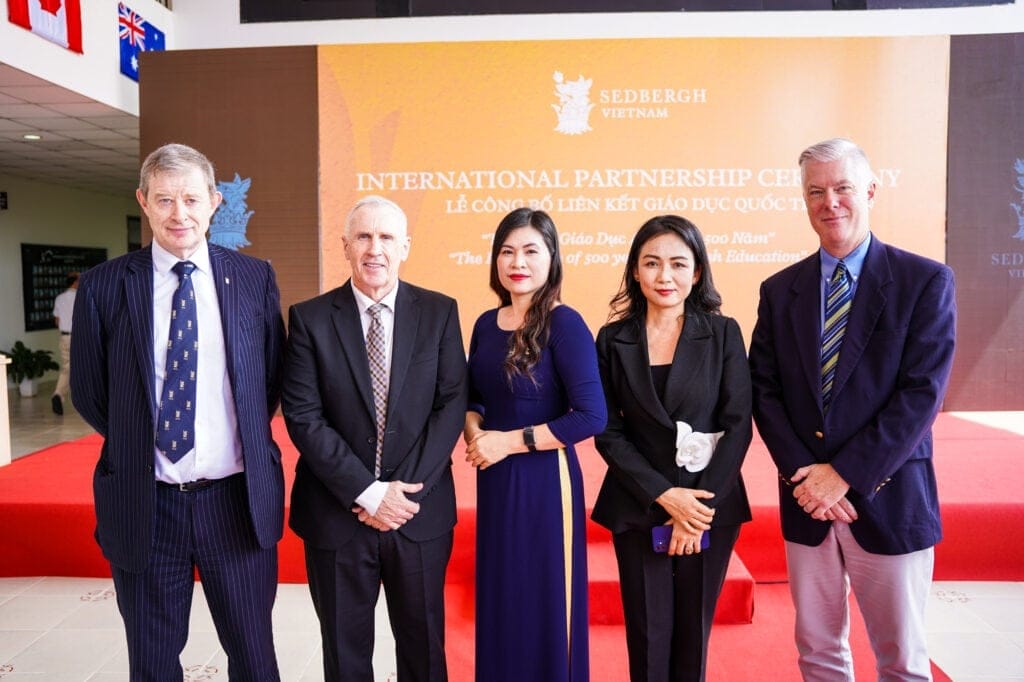
Ho Chi Minh City, Vietnam – November 14, 2023 – EQuest Education Group and Sedbergh School International Limited in England, United Kingdom today announced a collaboration to offer British educational programs in Vietnam. The agreement confirms that the first collaboration will be with the British Curriculum Integrated School (BCIS) in Ho Chi Minh City, rebranded “Sedbergh Vietnam”, with additional EQuest schools to be identified.
Starting at BCIS, this partnership will allow the EQuest Education Group to offer Vietnamese students the opportunity to study the British curriculum to gain the skills and knowledge essential for thriving in a globalized world.
“It is a great honour to enter into a formal collaboration with the EQuest Education Group, offering a British curriculum at BCIS in Ho Chi Minh City as part of their vision to transform bilingual education across Vietnam. Our commitment is for the long term in supporting the school to deliver excellence in all aspects of education and provide new opportunities for Vietnamese students in pursuing careers at home or abroad.”
Peter Marshall, Managing Director of Sedbergh School International Limited
About Sedbergh School
Sedbergh School is one of the leading independent boarding schools in the UK with a long and distinguished history. Founded in 1525, Sedbergh School is known for its achievements in academic success, sports, music, and performing arts. The school has a strong international reputation and attracts students from over 50 countries.
“This is a significant development for British education in Vietnam that will open up new opportunities for Vietnamese students. Sedbergh School has a long heritage dating back to 1525. At the heart of our educational philosophy lies the pastoral care of our pupils, with a broad selection of academic and extra-curricular opportunities and a commitment to excellence in all aspects of a holistic education. We look forward to supporting the Sedbergh School International team in developing their long-term partnership with the EQuest Education Group throughout Vietnam.”
Dan Harrison, Headmaster of Sedbergh School UK
About EQuest Education Group
EQuest Education Group is a leading provider of international education in Vietnam. The group operates a network of schools that offer British, American, and Vietnamese curriculums. EQuest Education Group is committed to providing high-quality education that prepares students for success in a globalized world.
About BCIS
BCIS is a school in the CIS school system, under the umbrella of EQuest Education Group. In collaboration with Sedbergh School International Limited, BCIS will be one of the largest Bilingual curriculum schools in District 7, Ho Chi Minh City. The school, emulating Sedbergh School’s educational approach, is dedicated to fostering students’ holistic development.
Websites:
- Sedbergh School: https://sedberghschool.org
- EQuest Education Group: https://equest.vn/en
- BCIS: https://bcis.edu.vn/en

Three enthusiastic scientists from the school; Jack, Mason, and Benedict, have joined forces to establish “Chemical Curiosities,” a fresh academic society. Their aim is to create a platform that ensures the school’s dedicated chemists have the opportunity to nurture their interests both now and in the future. The debut presentation on Friday evening was conducted by Benedict, who delved into a discussion on the tumultuous history of chemistry misuse.
Benedict began by explaining the fundamental and all-pervading nature of chemistry, highlighting some of the most significant chemical discoveries ever made:
- The process of pasteurization has been called one of the most important discoveries in science and chemistry because of the numerous lives that it has saved through preventing disease. Discovered by French scientist Louis Pasteur in the 1800s, pasteurization was a method by which milk was heated to a high temperature and then cooled down quickly before it was bottled. This helped the milk stay fresh for a long period of time
- The discovery of penicillin is credited to Alexander Fleming, a Scottish scientist and Nobel Prize winner in 1928. Fleming found that growing Penicillium Rubens created a property that could be used as an antibiotic. He named this discovery penicillin. Penicillin was the 1st antibiotic and kicked off a new branch of science upon its discovery
- Cracking is a technique used in oil refineries whereby large and complex hydrocarbon molecules are broken down into smaller and lighter components that are more useful for commercial or consumer use. Cracking is a critical stage in the process of refining crude oil.
- Distillation is a technique of capturing essential oil from flowers or plants using water vapour, other methods are also used such as maceration and enfleurage. Maceration is a method similar to extraction, where essential oils are extracted by soaking the flowers in water, oil or a solvent. Enfleurage is a two-step process of drawing a fragrance into a fat or oil base and then extracting it with alcohol.
- The Haber-Bosch process enabled humans to produce ammonia on a large scale at a higher efficiency than ever before. The process was ground-breaking, and the discovering duo earned two Nobel Prizes, in 1918 and 1931, for their work on large scale, chemical processes. The Haber Process now produces 450 million tonnes of ammonia, most of which is used to produce ammonium nitrate for fertiliser. The abundance of synthetic fertiliser has led to a decrease in guano harvesting around the world, consequently leading to fewer seabirds becoming extinct and less damage to cave ecosystems
Benedict then moved on to a range of horrifying examples of misuse of chemistry that spanned from pharmaceutical companies to psychedelic drug development to chemical warfare.
- Daraprim – In 2015 Turing, acquired the rights to a decades-old drug called Daraprim, which is a critical treatment for individuals with compromised immune systems, such as those with HIV/AIDS. Upon acquiring the rights to this drug, Shkreli (CEO of Turing) raised Daraprim’s price from $13.50 to $750 per tablet, a 5,000% increase.
- Ecstasy – the “godfather of psychedelics,” Alexander Shulgin revolutionized the synthesis and exploration of psychoactive compounds. His groundbreaking work includes the creation of MDMA (ecstasy) and the 2C series, providing profound insights through meticulous self-experimentation. Critics argue that his work poses ethical and safety concerns related to potential misuse, health risks, and the lack of regulatory oversight.
- Corporal Fritz Haber, who became the director of the German Chemical Warfare Service, began the age of deadly chemical warfare, when he ordered the release of 5,730 canisters of chlorine gas in 1915, killing over one thousand people. When he realised that the pale green colour of cholorine could give away its presence, he worked quickly to develop new harmful gases, including mustard gas and Carbonyl Dichloride (Phosgene).
- Hydrogen cyanide, a poisonous gas that interferes with cellular respiration, was first used as a pesticide in California in the 1880s. German research then led to the development of Zyklon A in the early 1910s, a pesticide that releases hydrogen cyanide upon exposure to water and heat. It was banned after World War I when Germany used a similar product as a chemical weapon.
- In 1938, 3 chemists working in Berlin split a uranium atom for the first time in human history. After they identified the huge amount of energy released when a uranium atom is split scientists realised that it could be used to create a very powerful bomb.
- With the aim of creating a substance that could effectively burn at high temperatures and adhere to targets, chemists in World War II created Napalm by combining naphthenic and palmitic acids with a metal compound, such as aluminium or magnesium soap. This mixture forms a sticky and highly flammable gel that adheres to surfaces, increasing the incendiary effect.
- White phosphorus, a highly reactive and flammable substance, was initially used in various industries. However, its application in warfare evolved with the development of incendiary munitions. The bombs were designed to burst upon impact, releasing white phosphorus, which ignites upon contact with air.
Boarding schools have been a part of the education landscape for centuries, offering an immersive and comprehensive educational experience. Nonetheless, boarding is sometimes perceived as old-fashioned, and people can have mixed views. However, anyone thinking independent schools are old-fashioned may have forgotten that during the school closures of lockdown many of these establishments led the way in the ability and promptitude with which they embraced online learning. Recalling Sedbergh Prep School’s own experience of the ‘overnight’ move to online teaching, it definitely wasn’t easy – but our dynamic, agile teaching staff had the skills and experience to transition quickly from physical to virtual classroom.
The reality is that boarding schools have become even more relevant to parents and to education than in the past. Far from being an outdated concept, the benefits boarding schools provide to parents and pupils have expanded:
“At the risk of sounding a bit like a dinosaur here, I’m going to come right out and say that the number one reason that I believe boarding is more relevant today than ever before is because of the day-and-age in which our children are growing up. Social media is top of the list, but there is also screen addiction, phone addiction. I think you would find many parents say – and I hear it all the time – ‘I’m glad I don’t have to grow up in this day-and-age’.
Families find it difficult to resist and to avoid because of the FOMO [fear of missing out] comparison that a child will make from one child to another. There is a huge fear of missing out if they don’t have a phone or if they’re not on social media. They feel that there is a currency that they don’t have in the playground, around school, outside of school. That’s a very common theme amongst families today. I don’t think, if they had a magic wand, that it is anything that people would wish for.
Boarding is an opportunity – not to wind back time to a bygone era, because there is still all of the fun, enjoyment and excitement that comes with this day-and-age, things like swimming pools, astroturfs, X-boxes etc – but it’s the opportunity to take away that fear of missing out. Parents can place children in a family-like, comfortable, fun environment with each other where they can continue to learn how to have fun, make friends and entertain themselves face-to-face, person-to-person – in a way that is otherwise becoming increasingly difficult. Boarding is a way to manage that environment.
We’ve massively controlled phone usage at the school over the last few years. It’s a means to call home, that’s it. It’s not for social media. If you ask a ten or eleven year old who comes into the boarding house, and who has a phone at home, if they want their phone – they’ll say yes. It’s our job to be the grown-ups in the room. There’s a time and a place and the boarding house is not the time nor the place. We do offer them alternatives though, so they learn other things to do with downtime. You don’t pick up a device – you play, talk to your friends, read, go outside.”
Will Newman, Headmaster, Casterton, Sedbergh Prep School
Parents of pupils who board also cite additional, compelling reasons for their interest in boarding, which the Headmaster expands on below.
Educational excellence outside the Classroom
Parents consider the benefits of small teacher to pupil ratios but Will Newman explains that education comes in many different forms.
“If you’re thinking about what is the academic teaching difference between day and boarding, we’re not teaching any lessons after 5pm. What that overlooks is that education comes in many different forms. The biggest part of education for our boarders is a hidden curriculum and I would strongly argue that the educational offering that boarders receive is very different to day pupils. Whether they know it or not, you’re teaching the children how to rub shoulders alongside somebody who is not the same as them – may have different views. They’ve got to be harmonious in the way that they live together as a part of their extended family. You’re teaching them to be independent, teaching them to be organised and to have, at times, resilience – I hesitate to use that word because it makes it sound like it’s a routine of cold showers in a freezing dorm with cross-country runs at dawn! And nothing could be further from the truth! But there are times when they’re going to have to get over bumps in the road on their own. These are experiences that are invaluable to them as they grow up.
Public exams and grades are, of course, extremely important but I think that when we look at the world in which our children are going to emerge at the end of prep school, the end of senior school, into university and beyond, what will be important is what else have you got. So, you’re highly academic and you’ve got 3 A*, that’s brilliant! But can you keep going when you’re tired? Can you overcome obstacles? Can you work as a team? Can you collaborate? Can you be inspirational to others? So, I think that the educational offering can be different but you’ve also got to consider what kind of education are you talking about?
Educational excellence in the classroom
If we were to look at just the academic education, I think that’s better too. We’re not bound by current government policy and political influences. At an independent school we’re able to remain true to our own course and educational philosophy. That brings stability and a focus on what we know to matter most of all. There’s greater opportunity; our parents work hard to pay the fees and as a result of that we can provide them with facilities and opportunities that otherwise they wouldn’t have access to. It’s mostly about the independence of our offering.
Reasons we see families choosing boarding at Sedbergh Prep
Articles talking about reasons parents choose to board will often refer to the stability that boarding schools provide to children whose parents might move around a lot or might be very busy. Whilst it is a benefit, it’s not something that is a major consideration for parents of Sedbergh Prep School pupils.
We’ve got some military families for whom that is definitely true. I’d say that for the majority of children that come to us as boarders it’s either because they are in a rural area, or we’re a rural prep school. It’s a beautiful part of the world where you have less dense population and there are fewer schools. So, in order to send their children to an independent school, boarding is part of that decision – or else you’re driving two hours to school every day and that’s not going to work.
Other times children’s parents are from overseas and they want to experience a completely different culture to the one that they’re used to at home, improve their English, improve all of the other things that boarding brings – independence, organisation and so on. Or we have local children who see the value added in boarding regardless of their travel time. We get a lot of that. We get many pupils that will start as day children and then board more and more because they see their friends benefiting and talking about how much fun they’re having.
Other times parents have got one eye on what’s happening at Year 9 and beyond. If they want their child to board at senior level, then it makes sense for them to get experience of this in the Prep School.
You can find out more about boarding at Casterton, Sedbergh Prep School at www.sedberghschool.org/prep/explore/boarding or complete for form below and a member of our team will get in touch.
Prep Boarding Form
Arrange a visit and discover the boarding opportunities at Sedbergh Prep. Please complete the form below and a member of our admissions team will contact you.
Every half-term, Headmaster Mr. Harrison extends a warm welcome to our most accomplished students in years 9 to 11, inviting them to a Commendation Lunch held in Queen’s Hall. In the inaugural lunch of the School year, Mr. Harrison greeted thirteen exceptional students who have made a commendable beginning in the face of stiff competition.
During a delicious lunch in Queens Hall Mr Harrison asked pupils and staff to share recommendations for a book they’ve recently read and liked.
Mr. Harrison started the conversation by sharing how his recent summer trip to Madrid had piqued his interest in the Spanish Civil War. He thoroughly enjoyed the novel “Winter in Madrid” by C.J. Sansom, a spy thriller in the style of Jean le Carré. Through this captivating story, he is gaining valuable insights into the unfolding of the Spanish Civil War, delving into the history of figures like Franco, the fascists, and the communists, just on the brink of the Second World War. Mr. Harrison expressed his particular fascination with the novel due to its setting in places he had personally explored during his Madrid visit.
In addition to book recommendations on sports psychology and the challenges of women in the home in the U.S. we were introduced to the following page-turners:
Lucy Clarke, ‘One of the Girls’
A fiction book about a group of friends who go on holiday together. Over the course of the holiday each of the friends reveals a secret about themselves that leads to a climactic end and totally changes their relationship.
Robert Galbraith, ‘The Silkworm’
The story of a gruesome murder with a lot of interesting plot twists. The detective of the story is an army veteran and he has an assistant helping him. The book is actually by J.K. Rowling writing under the pseudonym, Robert Galbraith.
Andy Weir, ‘Project Hail Mary’
At the start of the book an astronaut wakes up with amnesia to find that he is orbiting a planet. As the story unfolds we learn that something is taking the energy away from the sun and the astronaut is part of the mission to stop it. A really interesting story!
James Rebanks, ‘The Shepherd’s Life’
An fascinating autobiographical story that is as much about farming in the Lake District as it is about relationships; between James as a young boy and his father, and his father and his grandfather. James left school early but went back to a sixth form college and discovered a love of learning. He did well enough to earn a place at Oxford and graudate with a double first in history.