





Month: October 2023
The Sedbergh team eagerly embarked on their journey to this year’s National Schools Event held at Addington Manor in Buckinghamshire, a highly anticipated event that marks the culmination of a year’s worth of tireless teamwork and dedication. Thirteen horses and riders, representing both our Prep and Senior School, were part of our contingent. In this unique sport, riders from both schools join forces on the same team, fostering strong bonds. Our teams competed across a wide range of classes, spanning from 70cm to 1m 10, encompassing arena eventing, show jumping, team dressage, and individual dressage. With opportunities for riders of all interests, many of our equestrians participated in all three disciplines. For several riders, this Nationals event marked their inaugural experience on such a grand stage, proving their mettle as they transitioned from qualifiers to nationals. Merely making it to the event was a remarkable achievement, but returning home adorned with rosettes added the perfect finishing touch.
Prep school rider, Ella, got the week off to a flying start winning the competitive 70cm Pumpkin Show Jumping class with a speedy round and very tight lines. Scarlett took Reserve National Champion in the 1m 10 Arena Eventing so finished 2nd in the UK with a stunning round. This was an emotional round, as it was Scarlett’s last round for Sedbergh after competing in seven Nationals with the School. A true Sedberghian and brown blazer recipient helping the Team out whilst at university. We sincerely thank Sally and Scarlett for their endless input over the years. Prep School rider Zara took a super win the 80 Pumpkin warm up class with Elsie taking 3rd and Lucy finishing 5th.
Our teams narrowly missed out on securing rosettes this year. In the highly competitive field, our 90cm and 1m arena eventing teams claimed the 11th and 10th positions, respectively, among all teams in the UK. During the final two days of the event, our dressage riders showcased their skills in both the team and individual tests. Special recognition goes to Zara, who achieved an impressive 2nd place in the Novice Plate for her previous school, narrowly missing the top spot by a small margin. The grand finale of the Nationals belonged to Emma, who fearlessly tackled the challenging 1m 10 track in the pony section, ultimately earning the title of Reserve National Plate Champion. Despite the grueling three days of competition, they displayed unwavering determination and gave their all over the formidable jumps.
Thank you to the NSEA organisers and volunteers for organising such a fabulous Nationals. Thank you to all our parents, family, support crew and instructors for making this happen. Well done to the riders and ponies for working hard all year to gain these qualifications. The Sedbergh spirit shown throughout with everyone helping one another through the ups and downs of competing. Everyone showed a fantastic Sedbergh attitude throughout especially towards the mud and made some fantastic memories. Well done.
Vic Thompson, the Head of Design, Technology & Engineering at Casterton, Sedbergh Prep School, is stumped when asked to give an example of when her young learners have blown her away with their creativity and aptitude in Design, Technology & Engineering (DTE) or Computer Science. Why? Because there are so many examples! Eventually, she settles on the extraordinary gifs that pupils designed using time-lapses in Adobe Photoshop.
Understandably, parental interest in their children learning about ‘technology’ and coding has grown significantly in recent years. When parents (and others) say ‘technology’ they are generally referring to a broad and diverse range of tools, techniques, systems, and processes that are used to solve problems and complete jobs. Technology encompasses both physical devices and software, as well as the knowledge and expertise required to create, operate, and maintain them.
Vic teaches pupils from Year 1 upwards and regularly meets with her colleagues in the Senior School to discuss what the Casterton pupils are achieving, in context of where the pupils will progress if they continue to our Senior School programme, “For example, we’ve talked about introducing our pupils earlier to binary systems to smooth understanding at the Senior School.”
She explains that Casterton uses the Purple Mash Computing Scheme, a comprehensive set of resources aligned to the National Curricula, as a general source, “We dovetail the Purple Mash scheme in with all of the different facilities that we’ve got. So, we’re using micro bits with extension packs – the micros are simply mini computers that pupils can code in either block coding (starting with Scratch) or using Python as they get older, but they have hardware extensions so you can have tracker lights and motors and things that they can control. We tailor our teaching to what we think our pupils are going to be most engaged with.”
What are the key skills and concepts that students gain from learning computer science and how do they apply to other STEM disciplines?
“There’s obviously problem solving and analysing briefs. So when you are given a task, for example in engineering, you’re given a design brief. It’s the same in computing. You need to achieve something. Problem solving, looking at the code and if it doesn’t work; testing, refining, developing. That’s all the same in engineering. Then you’ve got communicating. Another transferable skills, be it graphically or with your coding and your annotations is explaining for debugging and things like that.”
“I intentionally do cross discipline projects with computer science in Design Technology (DT) because I think it’s good that pupils see the real world product. So we’ve got things where in DT, for example circuits, pupils will do programing on the computers and also see what actually happens to the lights, the switches and all of the inputs and outputs. They can see and test something that’s 3D, not just something on the screen or discussion based – they can see it working. I think that’s one of the pulls, but it’s also one of the more challenging things. It’s got to function and you’ve just got to keep going until your program works for the specific area that you’re looking at. It’s challenging as well as engaging, it’s also where children really have to learn resilience.”
Are there any common misconceptions or barriers that students have when it comes to learning computer science?
“Oh yes – children think its too difficult. Coding, especially, sounds like it is difficult. I think pupils put it on a pedestal and they think about it as something that they can’t achieve, especially when it’s text-based coding. That’s why we start with the block based so that they’re dragging and dropping and getting used to the different variables and timers and things like that. So, pupils can see it working and see things happening with the simulators before they then go into having to learn the language.”
Core i5 Club
“The club, which runs at break times, was designed to give an enrichment experience of computing to Years 7 and 8. The club started by building computers from scratch. So, we got old machines and we wanted to show our pupils, okay, this is how you put it together. The first one we made used a Core i5 processor. So, that’s where the name of the club comes from.”
“We’ve then gone on to develop other projects. For instance, we built a flight simulator. To do that, we built essentially a gaming computer. So, the pupils had to spec out what they would need to get a flight simulator to run. Obviously you’ve got the huge amount of processor power that they’ve got, the graphics, so what’s going to run, how much memory do they need, what graphics power they need. Then we were sourcing parts from donations and borrowing things. The idea is not to just buy a brand new computer; anyone can do that. It was to switch things in to see what works, evaluate, test, and then build something better. It’s really just about getting pupils to code and build computers and engage in the different areas of development.”
“Our projects are always something that neither Steven Denton (IT Support) nor I have ever done before, so we’re always pushing boundaries. One of the things that we’re going to start on is machine learning to AI. We’re going to do that with quite a simple set of kit parts and see how far we can get!”
“I like coding because its fun and I’m good at it. I just naturally understand it.”
Freddy, Year 8
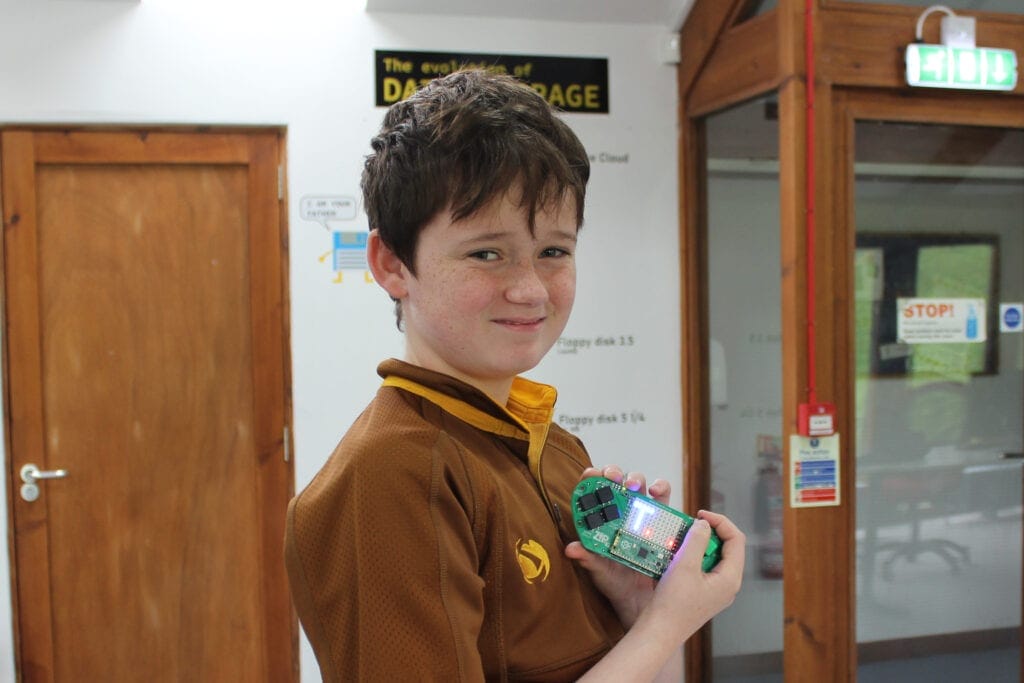

Ambition is the second of Sedbergh’s four core HARK values.
Humility | Ambition | Resilience | Kindness
Ambition refers to a strong desire and determination to reach goals, excel, and reach significant achievements. It involves setting high aspirations and working to fulfil them, often driven by a sense of purpose. Ambition can pertain to various aspects of life, including career, education, personal growth, and community engagement.
While ambition drives pupils to set and achieve goals, humility ensures that they approach their ambitions with authenticity, self-awareness, and consideration for others. The combination of ambition and humility prepares students for a well-rounded and successful adulthood, characterized by personal growth, meaningful achievements, and positive contributions to their communities.
People who are ambitious tend to have some behaviours in common. Collectively these behaviours reflect the drive, determination, and focus that characterise ambitious people as they work toward achieving their goals and aspirations.
I think if you don’t have ambition you’re not going to get anywhere. You don’t have to be the smartest one in the room but if you’re not driven to be the best person you can be then you are stuck going nowhere. Some people don’t go to uni but they’re driven and they end up being massive CEOs. Obviously it comes with all of the other things because if you’re not kind no-one is going to like you!
Elle, Year 13
What Does Ambition Look Like? Top 10 Behaviours
Do you want to be more ambitious? We’ve boiled down the behaviours that characterise ambitious people to a “top 10”:
- Set Clear, Measureable Goals: Ambitious people set specific, measurable, achievable, relevant, and time-bound (SMART) goals. They are results-oriented and have a clear sense of what they want to achieve and create a roadmap to reach their objectives.
- Take Initiative: Ambitious people are proactive and take the initiative to seize opportunities. They don’t wait for things to happen; instead, they actively seek out chances to grow, learn, and make progress.
- Work Hard and be Committed: Ambitious people understand that success requires consistent effort; they are willing to put in the effort and work diligently to achieve their goals.
- Persevere: Ambitious people don’t easily give up. They are determined and push through challenges and set-backs to reach their desired outcomes. Sometimes that means they need to step outside of their comfort zone or embrace uncertainty and venture into new territories to achieve their goals.
- Have a Positive Mindset: Ambitious individuals maintain a positive attitude and outlook. They view challenges as opportunities for growth and approach obstacles with determination rather than defeat. That includes being adaptable and adjusting plans if circumstances change.
- Manage Time Efficiently: Ambitious individuals manage their time effectively. They prioritize tasks and allocate their time efficiently to balance multiple commitments.
- Network: Ambitious people recognize the value of building relationships and networking. They connect with mentors, peers, and professionals to gain insights, collaborate, and create opportunities.
- Strengthen Self-Confidence: Ambitious people have self-confidence and believe in their abilities. They trust themselves to handle challenges and succeed in their endeavors.
- Innovate and be Creative: Ambitious individuals think creatively and innovate to find unique solutions to problems. They are open to exploring unconventional approaches and thinking outside the box.
- Practice Responsible Citizenship: Ambition often extends beyond personal success. Ambitious individuals often seek ways to give back to their communities, contribute to causes they care about, and make a positive impact on society.
Developing ambition at School equips our pupils with skills and qualities that empowers them to pursue their aspirations and overcome challenges – contributing to their success and well-being.
The PCA is the representative body of professional cricket players in England and Wales and each year, they recognise players voted best in the country by their own peers. Sedbergh’s own Mahika (Carus House) is the 2023 cinch PCA Women’s Young Player of the Year for 2023.
“We are absolutely delighted for Mahika and love that she shines a light on girls’ cricket in this country. Her talent and dedication to her cricket have done a lot to inspire the girls at Sedbergh to play. It is easy to understand why Mahika’s peers supported her, she is one of those rare pupils who embodies all of the values of Sedbergh School – but particularly humility and kindness.
We are also proud to see Old-Sedberghian, Harry Brook, recognised and send him our congratulations too.” Dan Harrison, Headmaster
Mahika’s award is the culmination of an exciting first season playing for the English side. Her most enduring memory is having her family there when she received her cap from Kate Cross, “I didn’t think at the start of the year that I’d be playing for England so I’m really grateful. Making my England debut was very special”.
Mahika is in Upper Sixth studying for her A Levels and in the short video below she explains how the support of her Housemistress and friends, are vital to juggling School and cricket – which she admits is hard!
Her Housemates are incredibly proud and supportive. Hannah, the Head of Carus House sums it up best, “We are all so amazed by what Mahika has managed to do, it’s quite hard to put into words how proud we all are! We always eagerly wait her return to school to hear all about the tournaments she has played at and the countries she visited while doing so.”
“Mahika is the most excellent role model to all in house, not only with her cricket ability but with her humble attitude and optimistic outlook of life.”
“Mahika is drowned in congratulations when she returns to school and we all refer to her as our ‘local celebrity’. She encourages all young cricket players to keep training and many view her achievements as a goal and a reason to keep going to early morning training or on 6 hour bus journeys to matches.”
Playing on Sedbergh’s first XI
Early in 2023, Mahika’s participation in Sedbergh School’s first XI met with a lot of excitement and community support. Mahika is the first girl to have played in the School’s first XI – but not the first girl to play on one of Sedbergh’s boys’ cricket teams.
Martin Speight, says, “We’ve played schools before with the girls on the first team, but we haven’t had a girl at that level on our own team. I can honestly say that none of the boys on the opposition team were phased. Certainly, they may not have played against a girl before, but when you’re staring down the pitch and watching her speed and accuracy when she bowls, it doesn’t take long to understand why Mahika was selected.”
Girls’ cricket at Sedbergh School
Girls’ cricket is flourishing at Sedbergh. There is an all-year round cricket programme run by Martin Speight (Sussex, Durham and Wellington), the current Director of Cricket, with additional support from Asher Hart (Durham and Hampshire). This includes a strength and conditioning (S&C) programme, pre-school cricket sessions every day in the winter, individual 1-2-1 sessions and team training sessions, all of which go towards training the players for a strong fixture list.
The girls’ cricket programme extends down into the Prep School at Casterton giving depth to the programme.
The School of Athens is a pupil-led academic society that challenges pupils to present and defend their thoughts in a supportive group of peers. More information is available on our School Societies.
This week’s engaging presentation and discussion – led by year 13 pupil, Seme – triggered an animated round of questions. Below is a summary of Seme’s presentation and highlights from the audience’s many questions.
Is School Uniform Really Beneficial?
School uniform was recorded in the UK in what, 1222 by the Archbishop of Canterbury. Uniforms are primarily meant to give schools a sense of identity. There is a statistic; parents spend around 213.4 pounds on uniform, which is 18% more than in 2018 in the uk. So, these are some reasons why uniforms may be harmful.
- Uniform removes a sense of individuality.
- Restricts a student’s freedom of expression and they can’t really be who they want to be. So if you want to dress as a hippie, dress as a hippie, it doesn’t really make a difference to social hierarchy in schools. Some people may argue if you have a uniform, everyone is going to be wearing the same thing, but there’s some schools that aren’t really strict about the accessories you can wear. So, you might have someone with a thrifted backpack and someone with a Prada bag. So there’s still going to be a difference.
- You can be bullied if you wear home clothes, but at the same time you can be bullied in uniform. Now everyone is wearing the same thing, so people are more likely to notice that maybe someone’s bigger than someone else or someone’s taller than someone else.
- Risk of revealing personal information. Let’s say you post a photo or something in your school uniform, then people might see where you are and they could do that research on you and that’s not very safe.
- Uniform doesn’t always cater the people’s comfort. So this can go both just how you dress or also religious things. For example, some people might wear hijabs and stuff they need to cover up, but your school uniform has a skirt that is kind of revealing, so that’s not very nice. Also, people might just find it kind of uncomfortable.
- Uniform can get lost slash stolen easily. I know this is from a personal experience! People keep taking my uniform because if you’re all wearing the same thing, people just grab it because everything looks the same.
- Once you’re done with school, you’re not going to be wearing your uniform in your free time. And people can get made fun of for wearing their uniform in a certain way. So let’s say someone wears this skirt really short, if someone wears it really long, it could be made really long.
Highlights from the Post Presentation Audience Discussion, Questions and Thoughts
In state schools in Scotland the only set part of uniform is wearing your tie, and many people still don’t wear that. So, how would you say your arguments would tackle that? When there’s uniform but there’s not really uniform?
Do you not think a uniform gives you the feeling that you’re ready for the day? Your parents get ready for work, they put their suits on. I put my suit on and I know I’m ready for the day.
There might be quite a lot of people that say wouldn’t feel comfortable expressing their culture or their sexuality or their differences at school and maybe a uniform would help them feel more comfortable as they don’t feel like they need to express themselves. Don’t you think a uniform would help people feel like they fit in more?
What about sports team uniforms? Isn’t the idea of a school and the idea of a team technically the same? We’ve all said that they’re effectively our team. So, by presenting ourselves in the same way that a football team might, we’re all in the same kit. We’re all in the same uniform to show that we’re together and it differentiates us from other schools.
Earlier we said uniform stopped people fitting into things that would accentuate some parts of their body that they didn’t want to be accentuated. But if you go to a school which doesn’t have a uniform and you’re on the sports team for example, they’ll often have a set of shirts that they’ve kept through years just to give to people where they go to matches. But if the uniform doesn’t fit you, that could make you feel uncomfortable. It might be shirts that are too small or massive and make you feel uncomfortable.
In the classroom. It can be a distraction not to wear uniform. When you are walk in and everyone’s in non-uniform, you’re like, oh, what are they wearing? Do you not think that if everyone wore different clothes it’d be distraction?
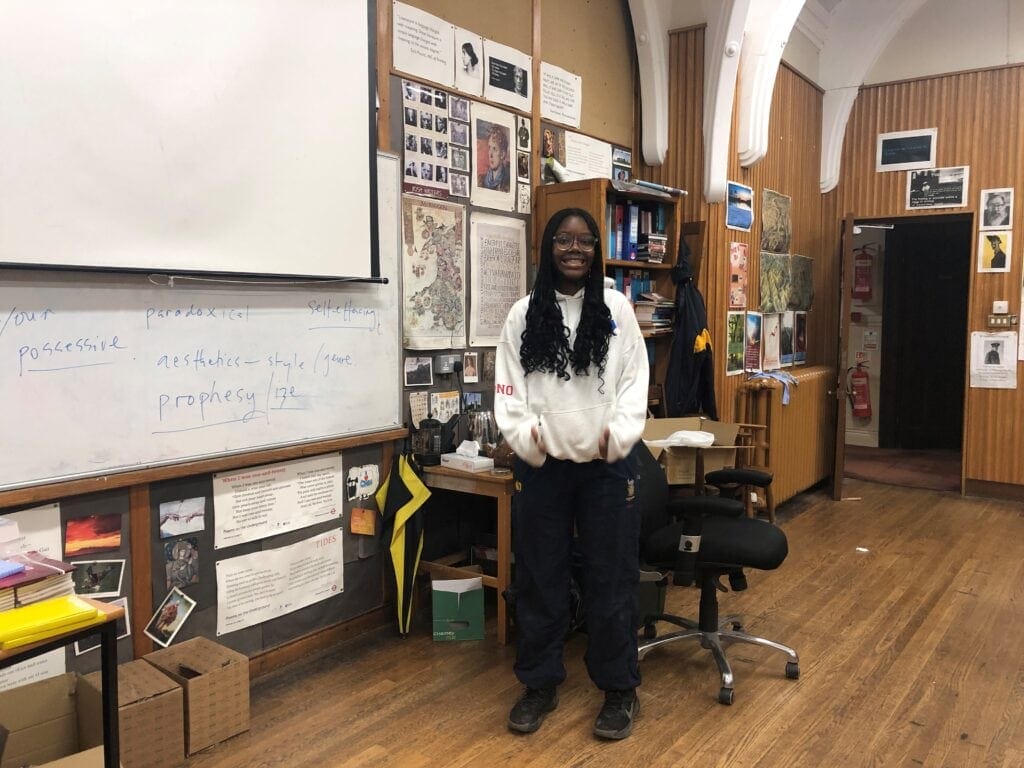


Across the UK, the Combined Cadet Force (CCF) is going strong; it can boast more than 130,000 cadets with contingents in over 500 schools across the UK.
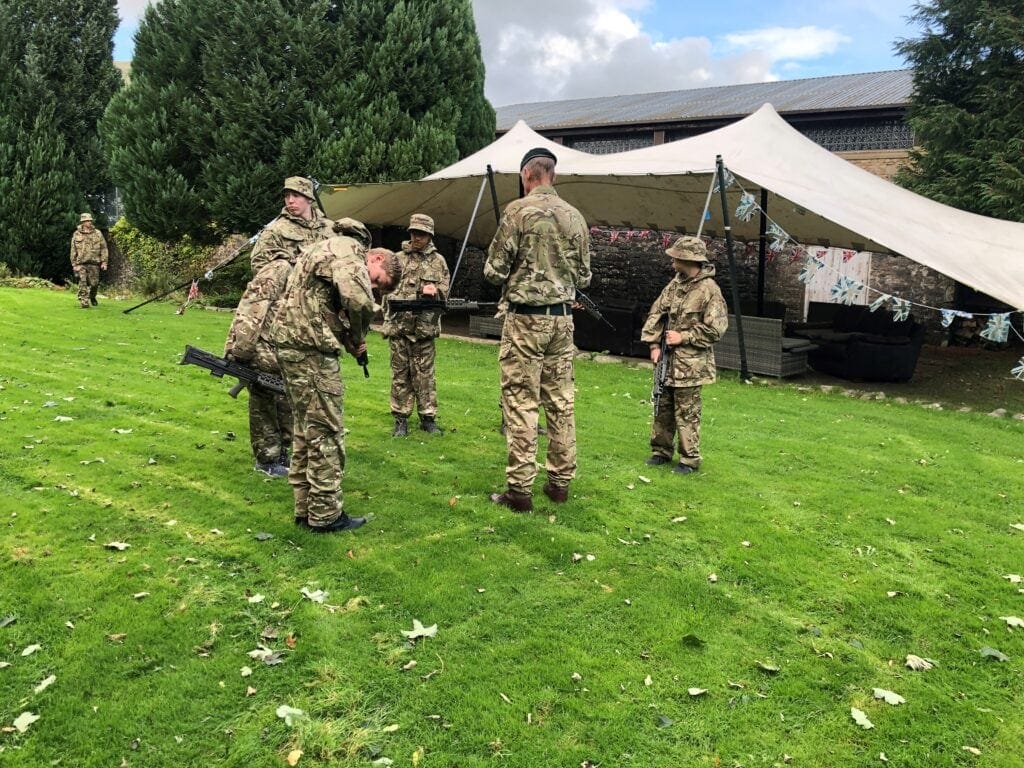
At Sedbergh, the origins of what is now the CCF unit can be traced back to the formation of the Rifle Corps in 1901. The Rifle Corps formed a Company of 2nd (Westmorland) Volunteer Battalion of the Border Regiment. School records show that the First Commanding Officer, the Headmaster, Capt Lowry held the first ‘Drill’ on November 9th 1901. At Sedbergh we now have contingent sections of the army, pipes and drums and navy.
The CCF is a popular choice for pupils who join for a range of reasons. Heritage is a prime motivator, some of the boys are second and third generation of military families, whilst some are looking forward to learning shooting and marksmanship. Others can’t wait to start on fieldcraft and survival skills. Although the CCF is clear that it is not a recruiting proposition for the defence force, a select few pupils, including Alex and Marcus, are looking to build experience ahead of applications to the military after leaving Sedbergh. A couple of Sedbergh pupils apply each year.
I’m hoping to enter officer training at Sandhurst to maybe enter the paras or grenardiers. I started my application a couple of weeks ago. After the basic documents I’ll hope to get an interview.
I switched to this [army cadets] at Easter last year from the pipe band, I’m the pipe major now. I want to get experience before I go in.
Alex, Year 13


Marcus, Year 12
For me I always had it as an idea that the military was an option and have always had Pathfinders in my mind. The reason for that is, for me, I want to be able to show to myself that I can do it and there’s no reason why I can’t be one of the first people going into possibly dangerous ground. It’s just the hazard of the role.
Cadets is different to other clubs and everything else. Since joining cadets I have gained more confidence and become more organised. I have developed belief in myself; I can do anything I put my mind to.
Benedict, Year 13, Head of CCF 2023
I enjoy learning new skills every week and opportunities that CCF brings like our yearly summer camp.
I also love everyone’s perseverance and determination within our section ( whether that comes from being part of Sedbergh School or Sedbergh CCF I’m not sure) this was most recently highlighted at our 2023 summer camp were we won the Altcar Cup (we were judged on a whole range of criteria over our time at Altcar, and also had a day specifically designed for earning points, during which our section composed completely of year 9 pupils managed to beat some sixth form sections.
Being a part of the CCF has taught me some really important life skills. I’ve become a better leader, learned how to stay organised by keeping my gear in check, and developed discipline through regular routines like boot cleaning. I have also gained other skills such as: Being able to fully strip, clean and reassemble a rifle, understanding and being able to teach others about camouflauge & marksmanship principles, being able to teach – as an NCO (non commissioned officer) you are expected to teach principles and skills you’ve learnt to cadets. I’ve learnt basic first aid (tourniquets, slings etc), survival skills (making fires and shelters) and many more interesting skills.
There is clearly an image that it is heavily involved in the army and many people believe that if you join the cadets you must join the army or do some form of military service.
Marcus, Year 12
When people think CCF is all about signing up for the military, I explain that while it does teach military skills, it’s not just a boot camp. It’s a versatile program that gives you leadership, discipline, and practical skills that can be useful in many areas of life, not just the military.
Benedict, Year 13, Head of CCF 2023
What skills do cadets learn?
In addition to physical skills such as navigation, fieldcraft, camouflage, weapon handling and first aid cadets learn highly-transferable, real-life skills. Following is not an exhaustive list, but it highlights the skills that Sedbergh pupils have said they most benefited from.
Leadership – CCF members often have opportunities to take on leadership roles, which can help them develop leadership qualities such as decision-making, teamwork, and effective communication.
Resilience – Through challenging training exercises and outdoor activities, CCF members learn to push their limits, persevere through adversity, and develop resilience in the face of physical and mental challenges.
Discipline – The CCF emphasizes discipline and a strong sense of responsibility, teaching participants the importance of punctuality, following orders, and maintaining high standards of behavior.
Problem-solving – CCF activities often require participants to think on their feet and find creative solutions to complex problems, fostering problem-solving and critical thinking skills.
Self-confidence – Overcoming challenges and achieving success in CCF activities can boost self-confidence and self-esteem, helping participants believe in their abilities.
Teamwork – Working in a cadet unit requires effective teamwork and cooperation. CCF members learn to collaborate with others, share responsibilities, and contribute to the success of the team.
Time management – Balancing CCF commitments with school and other activities teaches participants valuable time management skills, helping them prioritize and organize their responsibilities.
Communication skills – CCF members often need to communicate clearly and effectively with peers and superiors, honing their interpersonal and leadership communication skills.
Jess, Old Sedberghian currently studying Aerospace Engineering at Queens University, Belfast.
You can read Jess’ SED Talks interview.
I started doing CCF in year 10. For me, it was definitely a confidence building thing. It wasn’t that I was shy when I first started – it’s more that I’ve always known what I wanted to do but I haven’t always been the best at articulating it. Going into the CCF and being able to find my own feet and learn about leadership and learn how different leaders work has really helped me go into uni and know that it’s OK to just express yourself in different ways.
What pathways are there after Sedbergh?
Although the cadets is a youth organisation – so only available at School – CCF cadets can benefit from a wide range of skills and experiences that can be applied to various paths after leaving high school.
Higher Education: Most of our CCF cadets go on to pursue higher education at colleges and universities. The skills developed in the CCF, such as leadership, discipline, and teamwork, can be advantageous in the academic environment.
Military Careers: Some CCF cadets choose to pursue careers in the armed forces. The CCF provides a solid foundation in military training and discipline, making it a natural transition for those interested in joining the military.
Reserve Forces: CCF cadets can join reserve forces such as the Army Reserve, Royal Naval Reserve, or Royal Air Force Reserve. Their CCF experience can be a valuable asset in these roles.
Public Service: The leadership and citizenship skills learned in the CCF can be beneficial for careers in various public service sectors, including law enforcement, firefighting, and emergency services.
Volunteer Work: Many CCF cadets develop a strong sense of community service and continue to engage in volunteer work or humanitarian efforts after leaving high school.
Adventure and Outdoor Pursuits: Some cadets pursue careers related to outdoor activities, adventure tourism, or expedition leadership, drawing on the outdoor experiences gained.
With dreams of applying to the London School of Economics, TJ, who lives in Uganda, joined Sedbergh in Year 9, and is studying for economics, maths, further maths and physics A levels. While open to one day working in a financial firm, her ultimate ambition is to follow the path of her parents and have her own business.
What is it about entrepreneurship that that attracts you?
I feel like I’m quite an innovative person and I feel like I am quite creative and I don’t get to show that with a lot of my subjects, but I do think that I would enjoy going being an entrepreneur. It won’t be consulting, it’ll be an actual business.
Is economics something that you’ve always enjoyed?
Being completely honest, no! I only found out this year that I liked it, and that’s only because of A Levels. I kind of always knew I’d do something with maths integrated into it because I’ve always loved maths.
What is your dream university?
It’s London School of Economics. I would rate that quite highly and getting in there would honestly be a dream come true. The standing of the university is important as well as the fact it’s in London. I quite want to be in a big city type of thing. That’s what I’m thinking. I think it’d be good connections wise as well.
I’m thinking Exeter and Durham for my back-ups at the moment. I haven’t found any other two that I’m really passionate about, but I like those two.
Are you focusing on any particular extra-curricular activities to help you prepare?
Right now? I’m not going to lie. I’ve been very consumed by my subjects and when I’m not doing that, I’m kind of either taking a break or doing something completely different. My extracurriculars are not related at all to what I’m trying to do, but I’m definitely, when I go home, I’m going to be doing a lot of work experience and hopefully that’s with my mom on the accounts-side of her restaurant.
I’ve also got reading club on, I think that’s quite a nice break from everything I do. I am trying to get into reading more books about economics. I’m not a huge reader, that’s why I signed up. I want to get more into it. I just find it kind of hard to focus on just one thing, but I’m definitely trying to get into more reading about the subject at the moment. I’m still stuck on nonfiction. I quite like the biographies that are semi-fiction. They’re based on real stories. I quite like that. I’ve got into quite a few of them. I think one of my favorite books is Child of Dandelions and it’s about Uganda. So, I relate to it quite a lot. It’s about the expulsion of South Asians and Uganda. So I found that quite interesting. I’ve read it a couple of times actually.
I also do a bit of sport. I’m not a very sporty person at all, but because it’s rounders term, I do play rounders. It’s quite nice to get some fresh air without being super competitive or anything.
Mostly when I’m not in class, I like to take a break. I end up taking a break for a couple hours and then doing quite a lot of studying in the evening.
How as Sedbergh helped with the preparation for your university applications?
I think my teachers are the most helpful because at the start of the year, I was feeling very conscious about uni. I was quite scared and really close-minded to what I wanted to do, but they showed me that there’s so many more options. Part of that is that’s why I’ve kind of started thinking more finance based. They’re like with all the subjects you do, you’re perfectly capable of doing that sort of degree.
They have taken us on the UCAS Fair and recently I went to an open day. The School help me to explore.
Which of the school’s HARK values do you most identify with?
I want to say resilience because I feel like everyone has challenging times, but you know, have to keep going. And I feel like there’s a lot of times I’ve been like, this is too much for me. I feel like I’m aiming too high or something like that. But I know that if I keep going, eventually I’m going to get there. It doesn’t happen in one split second type of thing. And I feel like it’s quite important to remember and I feel like that’s the one that resonates with me the most.
How did you find settling in when you first arrived at Sedbergh?
For the first couple of weeks, it was really, really hard. My uncle lives really close by, so he would come see me quite often at the start. And I really struggled because I felt extremely homesick and I just thought, I don’t want to be here when I could be at home. And at the start, the reason I came to boarding school is because I was very reliant on my parents. I was quite a reliant person. I couldn’t do things by myself. So I found it really difficult at the start, but I think I kind of eased into it and kind of settled down as the school year kept going. And I think that’s become one of my biggest things. I can do things by myself and I don’t feel scared of doing it by myself and I don’t feel like I always need to be like, how do I do this to my parents? So it’s made me a lot more independent.
What do you think you’ll miss the most about Sedbergh?
I think it’s the fun in houses. It honestly feels like you’re a sleepover every single day. And I think that’s one of the best parts, coming back from lessons, being with their friends and being like, oh, this happened, this happened, this happened. It’s such a tight-knit family. I think I’ll really miss that.